A guide to Ronda red wine
Most red wine from southern Spain is an afterthought. Something warm and heavy that you drink with tapas and don’t think too hard about. Ronda is the exception — and the reason comes down to altitude.
At 700 to 1,000 metres above sea level, with temperature swings of up to 20°C between day and night, the Serranía de Ronda produces reds with a structural freshness that has no business existing this far south. Full ripeness, but genuine acidity. Dense colour, but mineral backbone. The kind of wine that gets more interesting as it warms up in your glass.
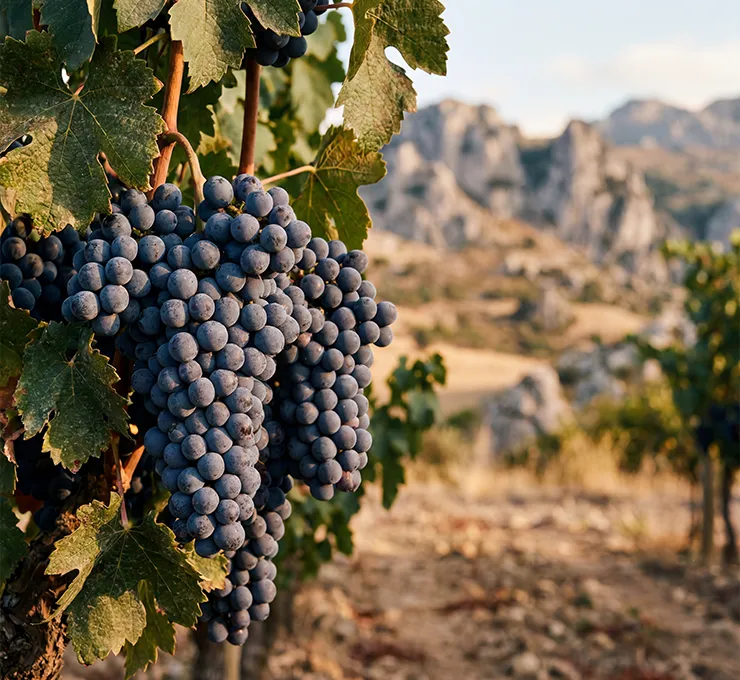
What makes Ronda red wine different
The standard Andalusian red — heavy, alcoholic, jammy — is a product of heat and low altitude. Ronda sidesteps that entirely. The altitude preserves the kind of natural acidity you’d normally associate with northern Spain. The limestone soils add a mineral edge. The Atlantic winds that pour through the Sierra de Grazalema to the west keep things fresher than the latitude would suggest.
The result is wines that are typically 14–14.5% ABV but don’t feel hot or flabby. Tannins that are genuinely ripe rather than harsh. A finish that lingers rather than burns.
The Peñín Guide — Spain’s equivalent of Decanter — has compared the soils here to Priorat’s. The Financial Times wine critic has covered the region. Robert Parker gave the Cortijo Los Aguilares Pinot Noir 92 points. These are not things you’d say about a region that was producing generic Andalusian plonk.
The best bottles
Every wine here has its own full guide — tasting notes, the bodega behind it, how to buy it, and whether it’s worth the price. This list grows as we cover more bottles.
The grape varieties in the glass
| Variety | In the glass | Key producers |
|---|---|---|
| Petit Verdot | Deep violet. Blackberry, violet, graphite, black pepper. Full-bodied, ripe tannins, long mineral finish. | Cortijo Los Aguilares, F. Schatz, Morosanto, Samsara |
| Pinot Noir | Translucent ruby. Raspberry, wild strawberry, floral notes. Medium body, silky texture, fresh finish. | Cortijo Los Aguilares, F. Schatz |
| Syrah | Cherry-violet. Dark plum, smoked meat, black pepper, herbs. Full, smooth, fresh for the south. | Gonzalo Beltrán, Descalzos Viejos, La Melonera |
| Tintilla de Rota | Near-black with violet. Spiced, liquorice, dark berry. High natural acidity, round tannins, built to age. | La Melonera |
| Romé | Cherry-red, bright. Florals, liquorice. Full, creamy, long finish. ~15,000 bottles/year in all of Spain. | La Melonera (in blends) |
| Cabernet Franc | Ruby. Mediterranean herbs, cassis, floral notes. Medium body, bright acidity, mineral finish. | Bodegas Excelencia, Kieninger |
| Tempranillo | Ruby-red. Dark plum, spice, rounded tannins. Lower acidity than northern Spain — best in young blends. | Cortijo Los Aguilares, Doña Felisa |
Petit Verdot
In Bordeaux, Petit Verdot is the difficult child. It buds early, ripens late, and in the cool, damp Left Bank climate it rarely achieves full maturity — which is why it makes up maybe 3% of most blends. It’s literally named “the small green one.”
In Ronda, it’s the flagship variety. The hot days ripen it fully. The cool nights preserve its acidity. The chalky limestone soils pull out its mineral character. What was an unreliable blending grape in France becomes something else entirely here.
Winemaker Bibi García of Cortijo Los Aguilares puts it plainly: the challenge in Ronda isn’t getting PV to ripen — it’s reining in its natural concentration. That’s a problem Bordeaux would envy.
Serve at: 17–18°C. Decant for an hour.
Pinot Noir
There is almost certainly no other serious Pinot Noir produced this far south in Europe. Cortijo Los Aguilares grows 6 hectares of it at roughly 900 metres, on north-facing slopes. Getting Pinot to work at latitude 36.7°N requires deliberate decisions: shading the bunches from UV radiation, harvesting in two passes, short macerations, used French oak.
The result has won Grand Gold at the Mondial des Pinots de Sierre — the world’s most prestigious Pinot Noir competition — three times. It’s the only Spanish Pinot to have won there at all. Robert Parker gave it 92 points and described it as “not completely identifiable as Pinot, but really pleasant.” Which, given where it’s grown, is about the highest compliment available.
Serve at: 14–15°C.
Syrah
Syrah is one of the most planted reds in the Serranía and turns up in a lot of blends. The honest assessment: it’s slightly inconsistent year to year. A good Ronda Syrah is genuinely exciting; an off-year is merely decent.
Worth seeking out specifically: Gonzalo Beltrán’s Perezoso (100% organic, grown below the Tajo gorge) and Descalzos Viejos’ DV Rufina — a small-production Syrah aged in barrels that previously held naturally sweet Axarquía wine, which gives it a smoky-sweet edge unlike anything else in the region.
Tintilla de Rota
Before phylloxera, Málaga’s vineyards covered over 13,000 hectares and grew dozens of indigenous varieties. Most were never replanted. Tintilla de Rota nearly went the same way — it was almost entirely gone by the 1990s.
La Melonera brought it back. Working from an 1807 ampelographic survey and in collaboration with the Rancho de la Merced research centre in Jerez, they tracked down surviving plants and built a wine project around them. The Payoya Negra (50% Tintilla, 50% Romé) scored 92 on Falstaff and won Gold at the Challenge International du Vin. The Yo Solo takes it further — no concessions.
Romé
Before its berries change colour at véraison, a Romé cluster shows three different colours at once. It’s believed to be the only red native variety that survived phylloxera intact in the province. Total production: roughly 15,000 bottles per year. La Melonera is the main producer in Ronda, using it in blends alongside Tintilla and Garnacha.
Cabernet Franc and Tempranillo
Cabernet Franc appears in coupages and as a monovarietal from Bodegas Excelencia. At altitude, the variety’s green, vegetal edge softens into Mediterranean herb character — rosemary rather than raw pepper.
Tempranillo is the honest workhorse. Cortijo Los Aguilares put it clearly: in Ronda it lacks the natural acidity it has in the north, so it’s mostly used for young, easy-drinking wines. Fine in a blend. Not the reason you come here.
Styles of Ronda red: joven, crianza, and beyond
Understanding the ageing categories matters when you’re buying — the same grape variety will taste quite different depending on whether it’s spent time in oak.
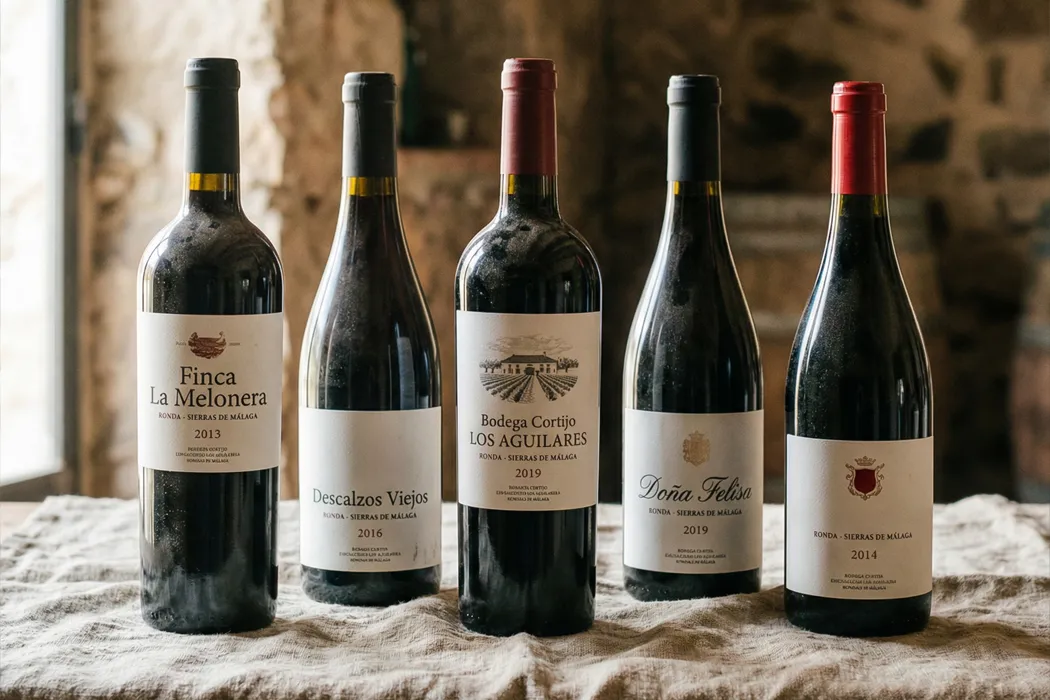
Joven (young): No barrel ageing required. Bright violet-ruby, primary fruit (red berries, plum), floral, fresh and easy-drinking. Serve slightly cool (14–15°C). Cortijo Los Aguilares’ CLA Tinto (Tempranillo, Garnacha, Syrah, fermented in concrete, ~€12) is the benchmark for this style.
Roble (oak-aged, short): 3–6 months in barrel. The fruit is still the main event, but there’s a layer of spice and a bit more structure. Typically around €13–18.
Crianza: Minimum 2 years total ageing, at least 6 months in barrel. This is where Ronda does its best work. The altitude-preserved acidity means these wines can handle 12–18 months in French oak without losing freshness. Expect cedar, cocoa, dark fruit, integrated tannins. Typically €18–30.
Reserva and above: Rare. Most bodegas were founded in the late 1990s or 2000s, which doesn’t give you much time to build a back-catalogue of long-aged wine. A handful exist — Doña Felisa’s Chinchilla Doble Doce comes close — but this is not yet a region defined by its reservas.
What is Ronda red wine like?
Ronda reds are full-bodied and fruit-forward but with a structural freshness — genuine acidity and mineral backbone — that sets them apart from other southern Spanish wines. The altitude (700–1,000 metres) and limestone soils are responsible for this. They’re powerful without being heavy.
What grape variety is Ronda most known for?
Petit Verdot. In Bordeaux it’s a minor blending grape that rarely ripens well. In Ronda’s warm days and cool nights, it reaches full maturity every year and produces some of the region’s most complex and celebrated wines. The Tadeo from Cortijo Los Aguilares (100% Petit Verdot, ~€43) is the benchmark bottle.
Is Ronda red wine expensive?
No — there are excellent options from around €12 upwards, and most of the best value falls in the €15–25 range. The Payoya Negra from La Melonera (Falstaff 92, Gold at the Challenge International du Vin) costs around €17. Prices are significantly lower than comparable wines from Priorat or Ribera del Duero.
What is the best Ronda wine to start with?
For a first bottle: Pago El Espino from Cortijo Los Aguilares (~€20–23) — 71% Petit Verdot, consistently scores 93–94 in Peñín, and clearly shows the character of the region. If budget is a factor, La Encina del Inglés from La Melonera (~€11–14) at Peñín 92 is remarkable value.
What makes Tintilla de Rota special?
It’s one of the oldest native Andalusian grape varieties, nearly extinct after phylloxera and urban development wiped out most of the original plantings. La Melonera in Ronda has been recovering and replanting it since 2003, working from a 200-year-old ampelographic survey. In the glass it’s dense, spiced, and notably acidic — a wine that genuinely tastes like nowhere else.