Ronda wine, from the people who live here
Thirty-six years ago, if you asked for wine at a bar in Ronda, you got a Fino. Maybe a Tío Pepe. Something from Jerez. The idea of planting vines here for serious red wine was, in the words of one of the people who did exactly that, “madness.”

Today, a Ronda Pinot Noir has won gold at the world’s most prestigious Pinot competition three times. A Ronda Cabernet Sauvignon took Best in the World at Paris twice. And in any bar in the old town, they ask you: white, rosé, or red?

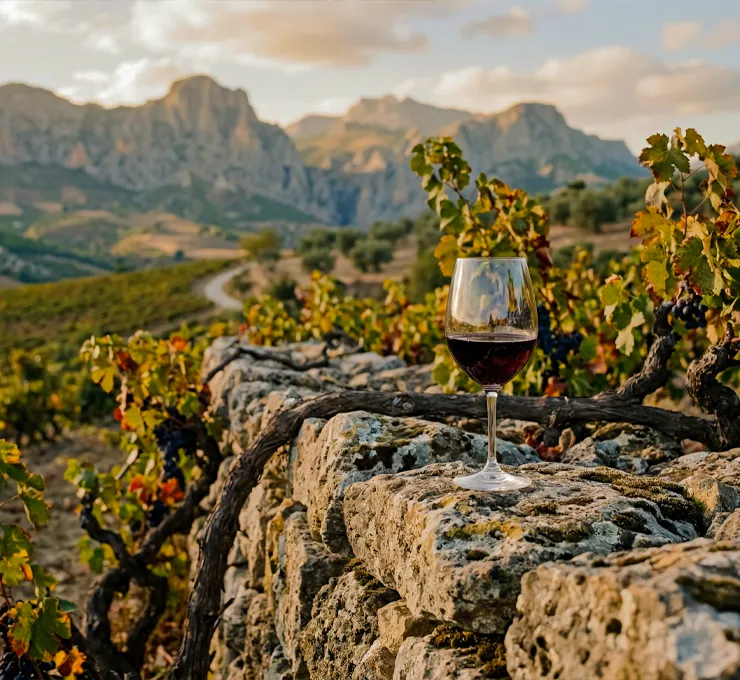
A wine glass at a vineyard in Ronda, Spain

So what exactly is Ronda wine?

First, the thing that trips up almost everyone: Ronda wine is not Málaga wine. Not sweet. Not fortified. Nothing like Sherry.

If you’ve had a Rioja Reserva — that structured, dry, dark-fruited red — you already have a better reference point for Ronda wine than anything from the Andalusian coast. Both are mountain wines. Both lean on structure and age well. Both have more in common with the wine traditions of northern Spain and southern France than with the fortified styles of the south.

This surprises people. It shouldn’t, once you understand the geography.

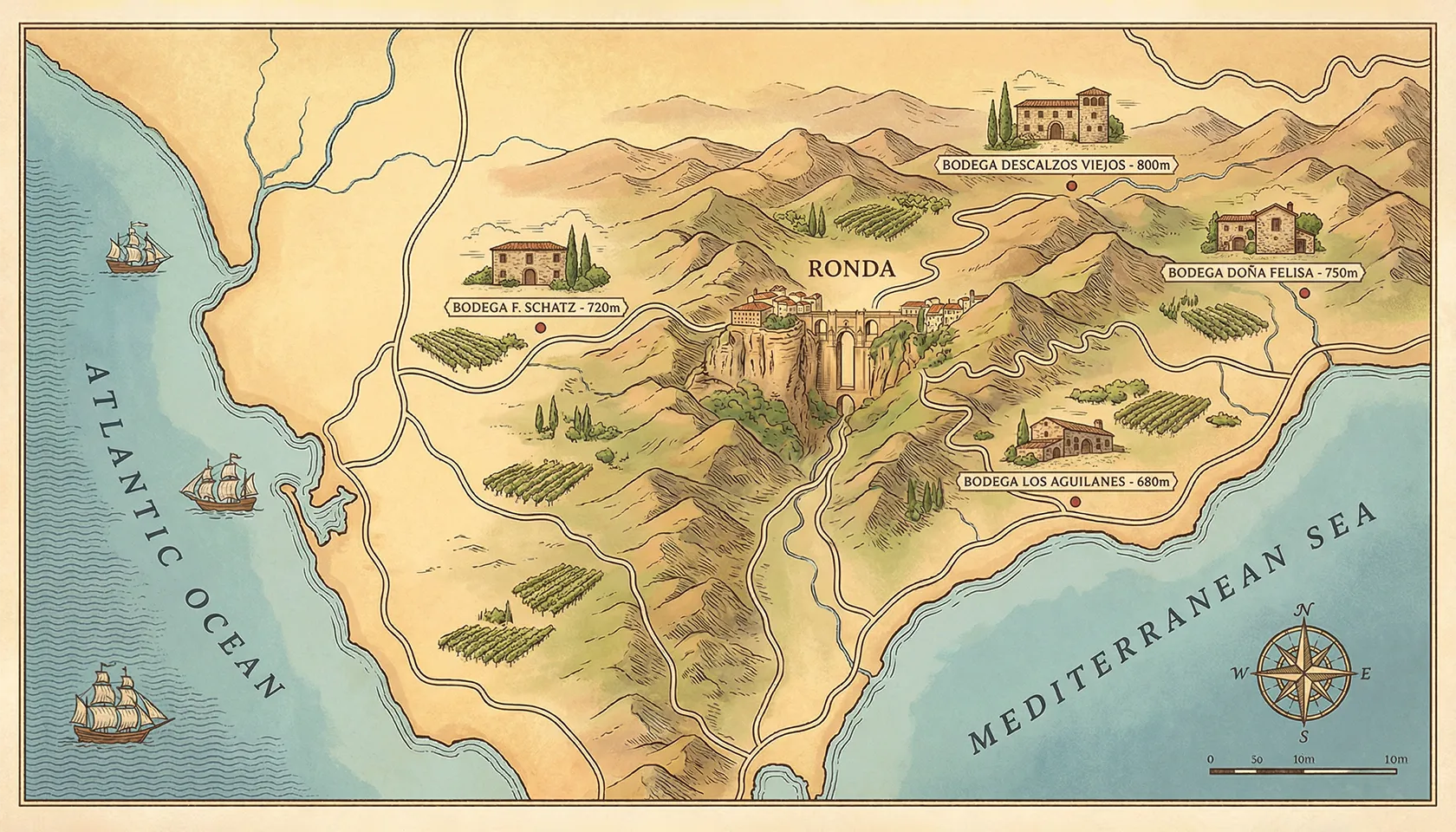
Two seas and 900 metres of altitude

Three things working together create the climate that makes Ronda wine possible.

illustrated map showing Ronda's position between the Atlantic and Mediterranean, with altitude elevation markers for key bodegas.

Altitude

Vineyards at 700–1,000 metres — comparable to Ribera del Duero, but in Andalusia. The altitude brings cooler temperatures than the coast just 60km south, while the 15–25°C diurnal swing preserves acidity, aromatics and freshness. That thermal contrast is what makes the difference.

Two oceans at once

The Serranía de Ronda sits at the watershed between Atlantic and Mediterranean. To the west, the Sierra de Grazalema funnels humid Atlantic winds towards the vines; to the south, the Mediterranean moderates winters and delivers 2,700–3,000 hours of sunshine. The result: genuine rainfall and intense summer sun — structure and fruit in the same glass.

Limestone

The surrounding mountains are marine limestone, part of the Baetic system formed by the collision of the African and European tectonic plates. The Peñín Guide has drawn comparisons with Priorat. Natural acidity, deep root penetration, and soils that speak for themselves.

"On the climatic map, there aren't many places with enough rainfall to avoid irrigation, the altitude, the thermal drop at night — and the condition of water stress that pushes roots deep into the soil and gives the wine its minerality. Ronda has all of that."

The grapes

Before phylloxera hit in 1878 — one of the first regions in Spain infected — the Serranía de Ronda had 13,494 hectares of vineyards and countless indigenous grape varieties. Most were permanently lost.

La Melonera, founded in 2003 just 2 kilometres from the Acinipo ruins, has made the systematic recovery of these lost varieties its central project. Working from Simón de Rojas Clemente’s 1806 ampelographic survey of Andalusian varieties and using cuttings from the Rancho de la Merced research centre in Jerez, they’re bringing back grapes that haven’t been commercially produced in over a century:

  • Tintilla de Rota — documented since the 17th century, exported to England as “Tent” wine. Only around 17 hectares survive in all of Andalusia. La Melonera’s Payoya Negra (Tintilla blend) won gold at the Challenge International du Vin.
  • Romé — the only truly autochthonous red authorised under both Málaga DOs. Some surviving vines in Axarquía are over 125 years old and pre-phylloxera.
  • Blasco, Melonera, Corchero Tinta — varieties that existed in Ronda’s vineyards before 1878. Now, slowly, coming back.

Ronda whites lean aromatic and mineral — altitude does the same work here as in the reds. Bodega Doña Felisa produces the region’s only traditional-method sparkling wine: Cloe Brut Nature, 100% Sauvignon Blanc, 14–18 months on lees. Worth finding.

Pinot Noir

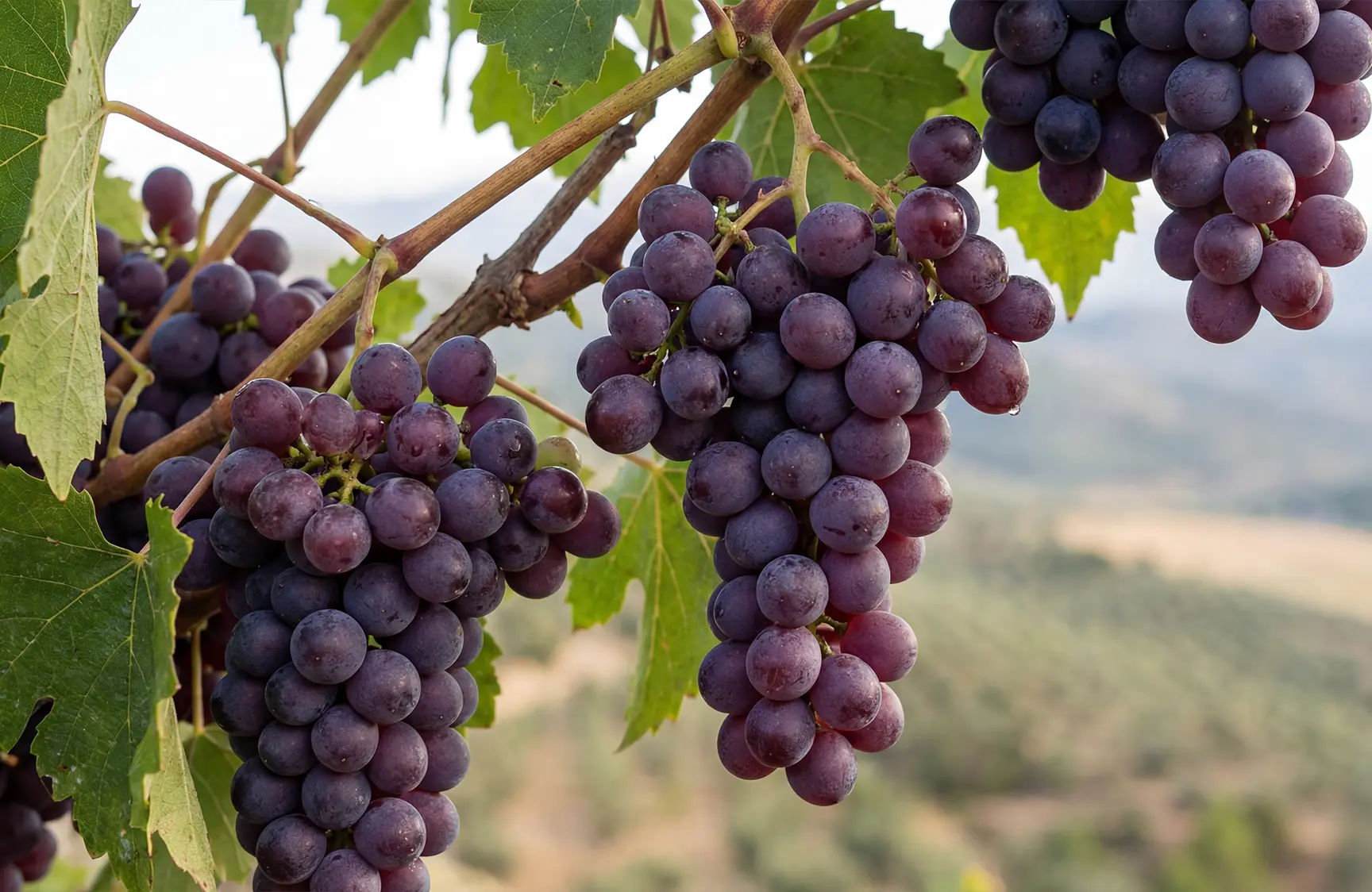
Cortijo Los Aguilares grows Pinot Noir at 900 metres — almost certainly one of the most southerly serious expressions in Europe. The altitude provides the cool nights and long growing season the variety demands, in a latitude where no one expected it to work. Triple Grand Gold at the Mondial des Pinots de Sierre: the world’s most prestigious Pinot competition, won multiple times by the only Spanish producer on the podium.

Pinot Noir grapes in Andalusia
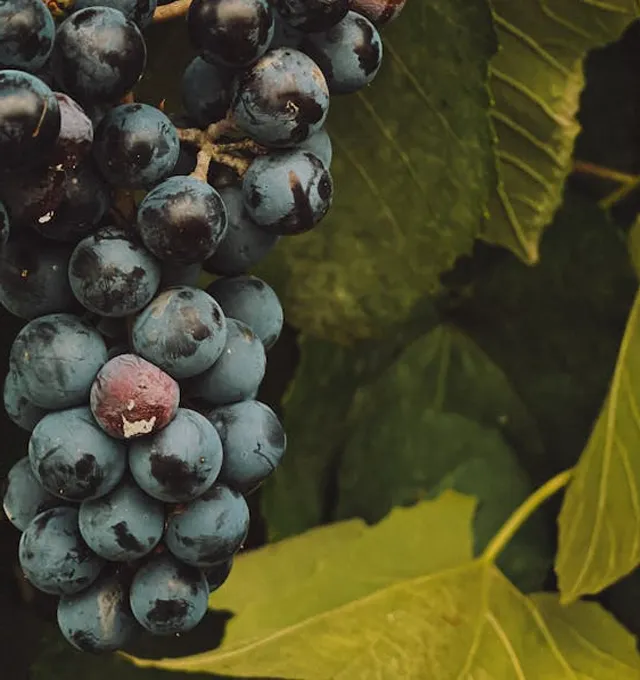
Petit Verdot grapes

Petit Verdot

In Bordeaux, Petit Verdot is an afterthought — a late-ripening variety that rarely reaches full maturity in the Atlantic climate. Hence the name: the little green one. In Ronda, it’s the flagship. Juan Manuel Vetas planted it in 1991, producing some of the oldest vines in Spain. The mountain climate delivers what Bordeaux cannot: a long, hot season for full ripeness and cool nights to preserve freshness. The most internationally recognised Petit Verdot in Spain — a variety that’s a footnote in its homeland, and a destination wine here.

The bodegas

There are around 25 active wineries in the Serranía de Ronda. See our full guide to discover which to prioritise, how to visit, logistics, what each costs.

Best wineries in Ronda
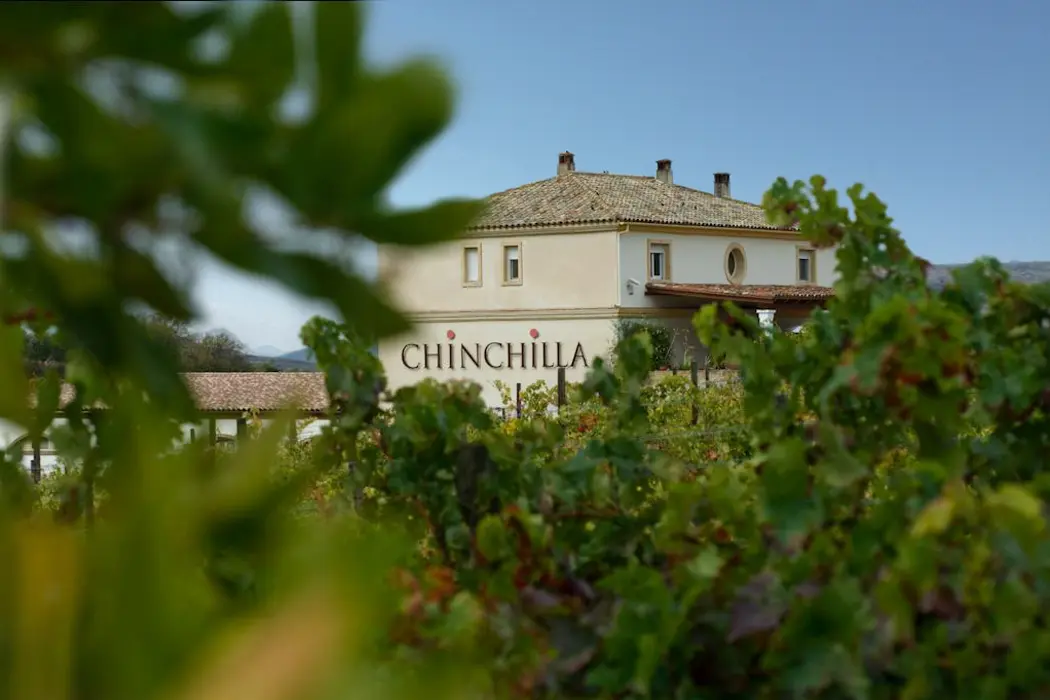
Winery Doña Felisa Chinchilla in Ronda
Bodega La Melonera in Ronda, Spain

Visiting the wineries

Most bodegas are 5–20km from town — book ahead, always. 

Visits: 90 minutes to 2 hours, €15–50 per person, typically vineyard + cellar + tasting of 3–6 wines with local products. Average around €30.

Best month: September (harvest). Spring (April–May) for wildflowers. Avoid July–August.

Day trips: Málaga 1.5h, Marbella 1h20, Seville 1.5–2h.

Where to drink Ronda wine without leaving town
Not every visit needs a full winery tour. The town has a handful of places that take local wine seriously — and honestly, an afternoon working through Ronda producers by the glass in the old town is a perfectly valid way to spend your time.

Entre Vinos wines in Ronda

Entre Vinos is the starting point. Small, knowledgeable, genuinely focused on the Serranía. If you want to work through several local producers without committing to a full visit, this is where you do it.

Pura Cepa table with white wine glasses

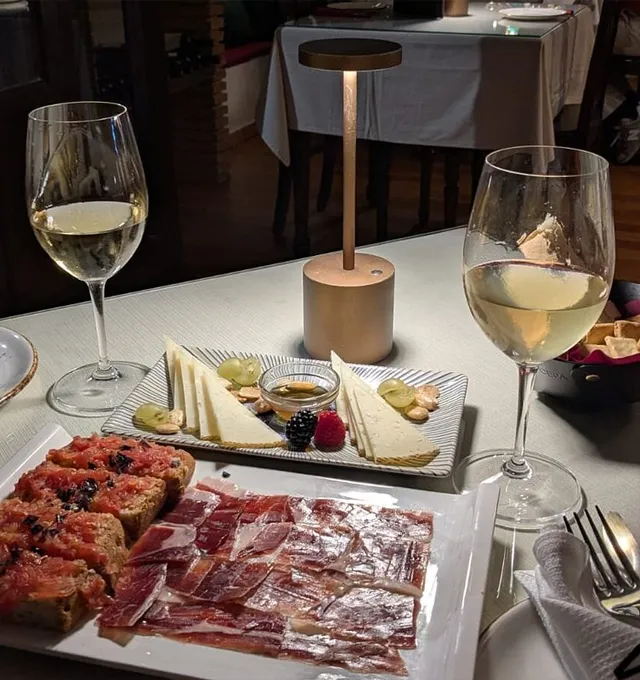
Pura Cepa (inside the Hotel Palacio de Hemingway) takes a broader approach — a well-curated list that spans Spanish regions, with a good local section. Food pairing is taken more seriously here than at most wine bars in town.

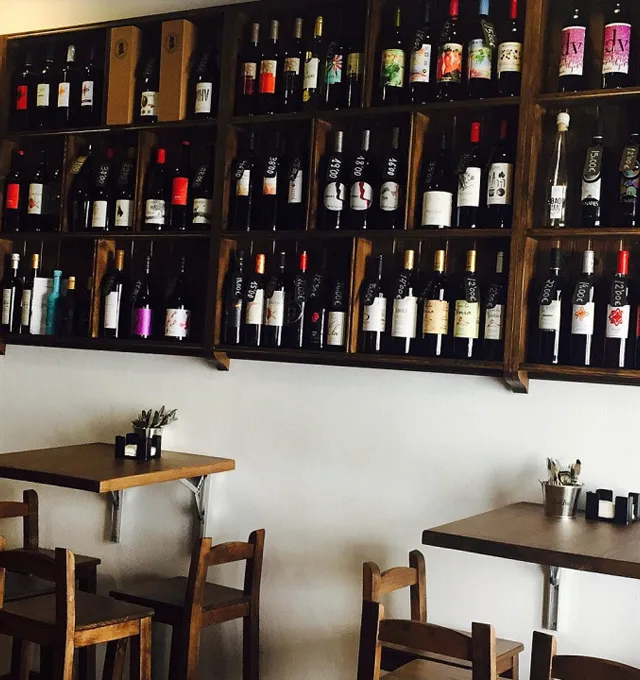
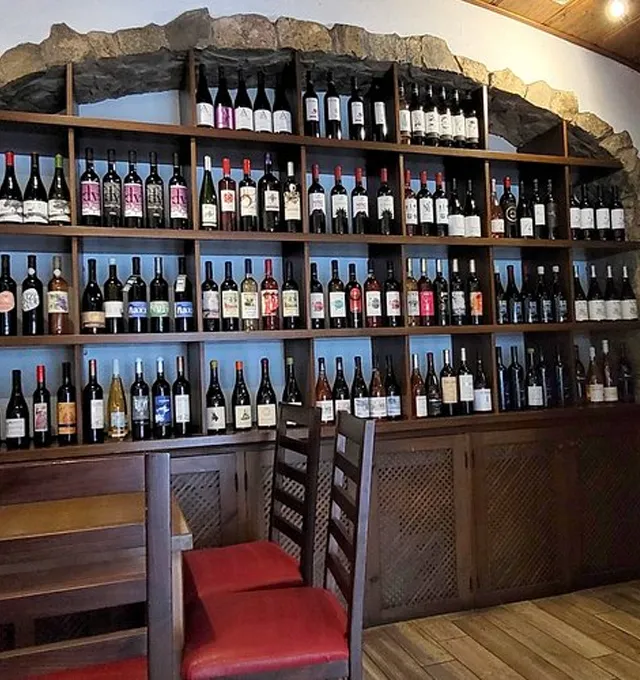
Tabanco Los Arcos wine wall

Tabanco Los Arcos for something more atmospheric — an old-fashioned tabanco-style bar with a rotating selection of local wines by the glass.

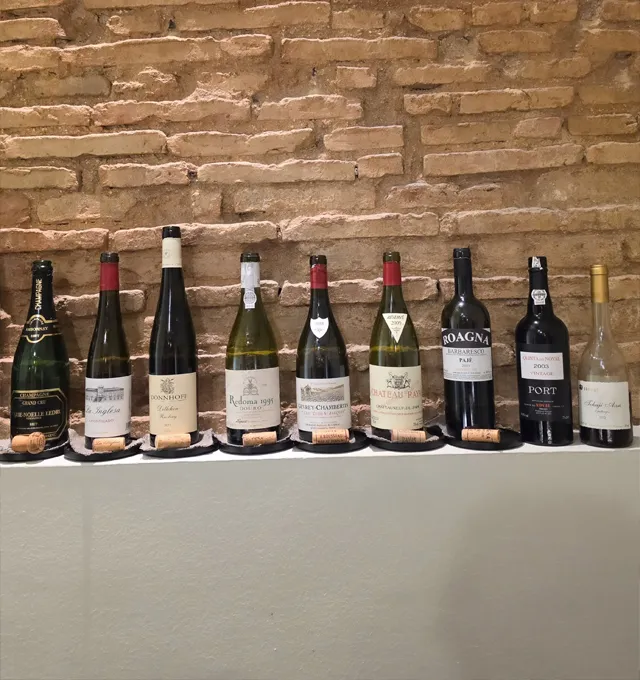
Bardal wines selection in Ronda

Bardal’s wine list is exceptional and specifically built around the wines of the Serranía de Ronda — this is where you spend money on a bottle you’ll remember.

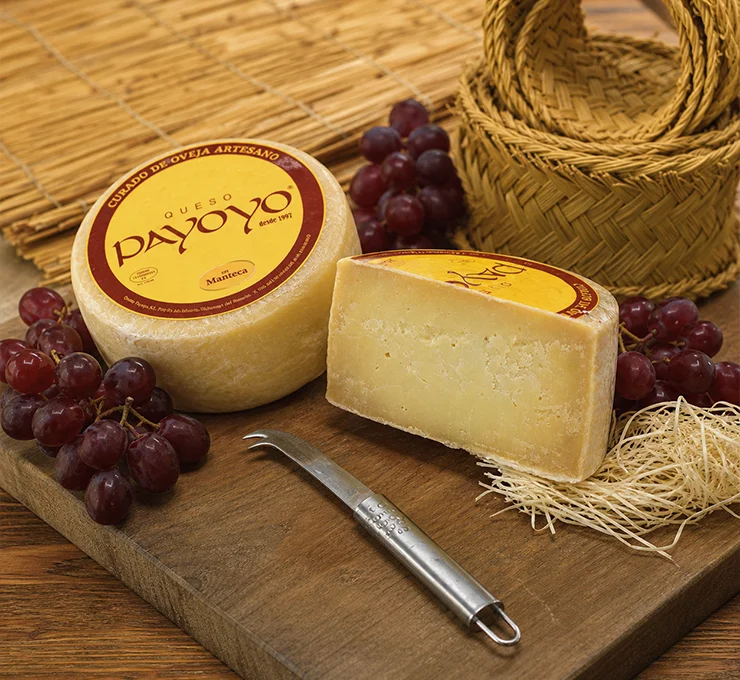
A spanish payoyo cheese with some grapes

What to eat with Ronda wine

The food of the Serranía matches the wine — mountain country, cured meats, wild game, local dairy.

Rabo de toro with structured, oak-aged reds — Descalzos Viejos DV+, Cortijo Los Aguilares Pago El Espino, or Chinchilla Doble Doce.

Queso Payoyo — award-winning artisanal cheese from Payoya goats native to the Sierra de Grazalema, multiple World Cheese Award winner. Semi-cured versions with young dry whites; cured wheels with young Tempranillo or Garnacha. And La Melonera’s Payoya Negra makes a symbolic and genuinely complementary pairing: the Tintilla-based acidity cuts right through the fat.

Game meats — venison (venado), wild boar (jabalí), partridge (perdiz) — demand the most structured reds.

Wild mushrooms from the Serranía with Pinot Noir. Not a difficult sell.

Ibérico pork from free-ranging black pigs — the same holm-oak forests where Cortijo Los Aguilares raises their pigs, on the same estate as their vines.

From Acinipo's coins to Friedrich's suitcase

We named this project after a coin. A small bronze coin minted around 47 BCE at Acinipo — the Roman city 20 kilometres northwest of modern Ronda, at 999 metres above sea level — showing a grape cluster on one face and wheat on the other. Economic advertising: this is what we grow, this is what we’re proud of. One of those coins is in the British Museum.

Then phylloxera struck in 1878 — one of the first regions in Spain infected. Of the province’s 112,000 hectares of vineyards, 13,494 were in the Serranía de Ronda. The devastation was total. Wine essentially vanished for 100 years.

In 1982, Friedrich Schatz arrived. In 1991, Juan Manuel Vetas planted the first Petit Verdot. Others followed. D.O. Sierras de Málaga was created in 2001. One of the winemakers from those early years: “I’m just happy that the little grain of sand we put down at the beginning has generated something real.”

Today there are 25 bodegas, 300 hectares, around one million bottles a year. In the bars of Ronda, when you ask for wine, they ask what kind.

Is Ronda wine good?

Demonstrably, yes. Cortijo Los Aguilares has won Grand Gold at the Mondial des Pinots three times. Bodega Doña Felisa’s Cabernet Sauvignon took Best in the World at Paris in 2014 and 2016. Descalzos Viejos has won Great Gold at Concours Mondial de Bruxelles. The Peñín Guide regularly scores top bottles at 90–94 points.

Petit Verdot is the signature variety — a grape that struggles in Bordeaux but thrives here. Ronda also produces serious Pinot Noir, Syrah, Cabernet Franc, and indigenous pre-phylloxera varieties including Tintilla de Rota and the recently recovered Melonera. About 20% of production is white.

They’re separate Denominations of Origin, though governed by the same regulatory body. D.O. Málaga covers sweet and fortified wines (Pedro Ximénez, Moscatel). D.O. Sierras de Málaga — which includes the Ronda subzone — covers dry still wines: whites, rosés, and reds. Very different products, very different traditions.

Entre Vinos (Calle Comandante Salvador Carrasco) is the best starting point — over 100 wines, many by the glass from €2–3, tapas from €1.50. 15 Arroba and Tabanco Los Arcos are also worth visiting. The Museo del Vino has a wine shop with local bottles if you want to take something home. Bardal (2 Michelin stars) is the special occasion choice.

Selected producers export to the UK and EU. Cortijo Los Aguilares is available through UK specialist importers including Indigo Wine and Roberson Wine. F. Schatz and Descalzos Viejos appear sporadically in specialist Spanish wine retailers. Within Spain, most bodegas sell direct from the estate and via their own online shops. Stock is limited — production volumes across the whole region are around one million bottles a year.

Different in almost every respect. Rioja is primarily Tempranillo-based, with a long tradition of extended oak ageing and a well-established export market. Ronda leans on Petit Verdot, Syrah, and international varieties alongside indigenous grapes being recovered from near-extinction. The altitude (700–1,000 metres) gives Ronda wines more freshness and mineral acidity than most southern Spanish reds. Where a Rioja Reserva is reliable and structured, a Ronda red tends to be more individual — sometimes more ambitious, sometimes more unusual. The price points are broadly comparable for equivalent quality levels.

Sources: Guía Peñín, Consejo Regulador D.O. Sierras de Málaga, Bartolomé Mora Serrano (numismatic research on Acinipo coinage), Rancho de la Merced research centre (Jerez), Mondial des Pinots de Sierre competition records, Concours Mondial de Bruxelles records, International Cabernet Competition Paris records.