Payoyo Cheese: Types, Taste and Wine Pairings
A small cheese factory in the highest village in Cádiz province entered one of their everyday cheeses into the World Cheese Awards in London. No special batch, no competition-only recipe — just the same cheese they sell to anyone who walks through the door. It won a Super Gold, competing against over 3,000 entries from around the world. That’s Payoyo.
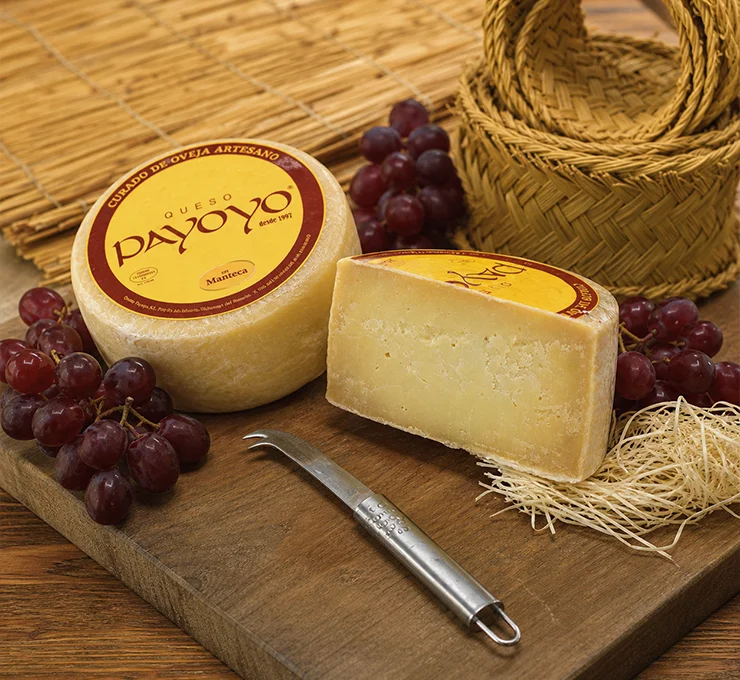
What is Payoyo cheese?
Payoyo is an artisan cheese from the Sierra de Grazalema — a mountain range that sits between the provinces of Cádiz and Málaga, about 30 kilometres west of Ronda. It’s made from the milk of the Payoya goat, a breed native to this area, or from Merina Grazalema sheep milk, or a combination of both.
One thing most articles get wrong: “Payoyo” is not a PDO designation or a cheese category — it’s the registered brand name of one specific producer, Quesos Payoyos. Other local cheesemakers also produce cheese from Payoya goat milk and are perfectly entitled to say so on the label, but they can’t call it Payoyo. What you’ll see instead is something like raza autóctona 100% Payoya.
This matters if you’re buying online and wondering why some products say “Payoyo” and others don’t.
Goat, sheep, or mezcla — which Payoyo should you buy?
This is the question most articles sidestep. Here’s a direct answer.
Pure goat (100% Payoya milk) — the original
The goat version is the most intense. Payoya goats produce milk with a higher fat content than most commercial dairy breeds, and you taste it: the cheese has real character, an earthiness, a sharpness as it ages. Fresh, it’s mild enough for anyone. Semi-cured, it starts asserting itself. Cured and aged, it’s a strong cheese — not for people who want something gentle, but exactly right for someone who wants something interesting.
This is the original. If someone says “Payoyo cheese” without further specification, this is what they mean.
Pure sheep (100% Merina Grazalema milk) — the Super Gold
The sheep version is generally smoother, creamier, and more approachable. But the most interesting example isn’t mild at all.
One of the aged sheep’s cheeses from the area — cured for 90 to 95 days, then wrapped in wheat bran (salvado de trigo) — won a Super Gold at the World Cheese Awards in London, competing against over 3,000 cheeses from around the world. The wheat bran does something unusual: it adds an earthiness and a slight nuttiness that is genuinely unlike anything else on the market. The producer entered their standard commercial product — not a batch made specially for judges. The same cheese you can buy is the one that won.
It’s a strong palate — good with wine, good after dinner, and apparently excellent with dessert if you take the French approach.
Mezcla (mixed milk) — the best place to start
The blend of goat and sheep milk is the most forgiving introduction to Payoyo. You get the richness of the goat milk, softened by the creaminess of the sheep. It’s versatile enough to go with most things, and interesting enough to hold your attention. If someone is new to the cheese and not sure whether they like strong flavours, start here.
Villaluenga del Rosario
Villaluenga del Rosario is the smallest municipality in the entire province of Cádiz. It’s also the highest. There are currently three active cheese factories operating there: Quesos La Covacha, Queso Oliva, and Quesos Payoyos. From a village of around 400 people, those numbers say something.
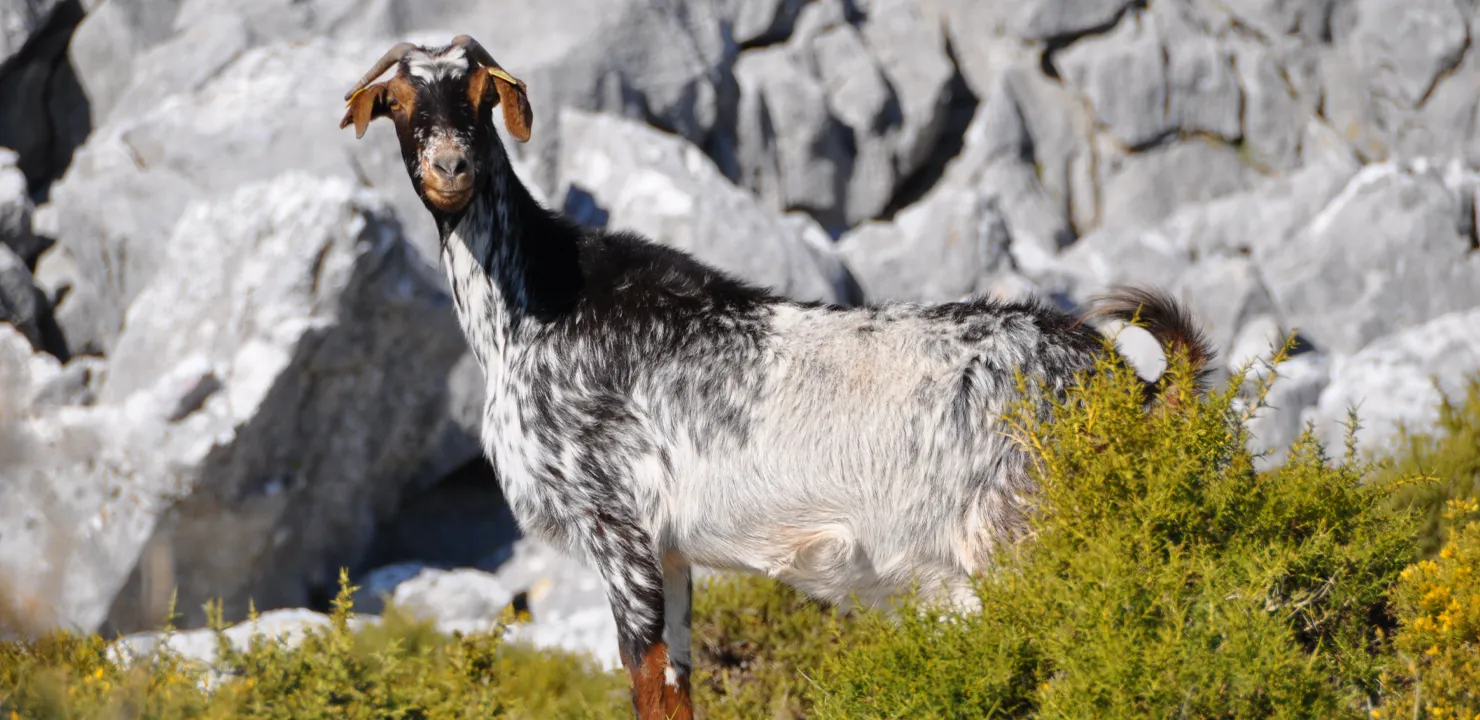
Villaluenga del Rosario is the smallest municipality in the entire province of Cádiz. It’s also the highest. There are currently three active cheese factories operating there: Quesos La Covacha, Queso Oliva, and Quesos Payoyos. From a village of around 400 people, those numbers say something.
How it's made
The soft cheeses start with rennet from a suckling kid (cuajo del cabrito lechal) added to fresh milk. The curds are pressed into moulds just enough to give the cheese its shape — not for texture, only for form. Left overnight to ferment, then moved to brine. It’s a process unchanged in its essentials for generations.
For the aged varieties, the cheese spends weeks or months in temperature-controlled chambers. The wheat bran version goes through an additional curing stage wrapped in salvado de trigo after the chamber ageing.
One detail worth knowing: you can learn the process yourself. Workshops in Villaluenga del Rosario include a hands-on cheesemaking session, overnight accommodation, and a tasting — worth building into a trip if you’re visiting the Sierra de Grazalema or Ronda.
Payoyo cheesecake
The tarta de queso made with fresh Payoyo goat cheese has become one of the most searched variations of the cheese in its own right. Fresh goat cheese works well in a baked cheesecake in the style of a Basque burnt cheesecake — high heat, dark top, liquid centre. The slight tang from the goat milk makes it noticeably different from standard cheesecake. Several restaurants in Ronda and the Serranía serve their own versions. If you see it on a dessert menu, order it.
Where to buy Payoyo cheese
In the Ronda and Grazalema area: Any deli or specialist food shop in Ronda will stock at least one variety. In Villaluenga itself and in Grazalema, the local shops carry the full range, including fresh and seasonal varieties you won’t find elsewhere.
Online (Spain): Quesos Payoyos ships throughout Spain and internationally — their website is the most direct route. Other Spanish specialty food platforms stock various producers’ versions under the Payoya goat milk label.
Online (UK and Europe): Several Spanish food importers carry the cured and aged varieties. Search for “queso payoyo” or “Payoya goat cheese” on specialist Spanish food sites. The cured varieties travel well; the fresh does not — stick to semi-curado or curado for online orders.
What to eat with Payoyo cheese
At the restaurant of the inn in Villaluenga del Rosario, chef Juan Andrés serves it several ways: salad with fresh Payoyo goat cheese, cod au gratin with Payoyo, and a simple coleslaw with fresh cheese and walnuts that works considerably better than it sounds. The area’s game tradition means venison loin with local Sherry wine and wild boar stew are also regulars on the menu — and both pair naturally with the aged cheese varieties.
Beyond the restaurant: quince paste (membrillo) with the cured goat variety is the local standard. Honey and toasted almonds with the semi-curado. For the wheat bran aged sheep cheese, try it as the French do — after the main course, before dessert, with something good to drink.
Which wines to drink with Payoyo cheese
The combination of Ronda wine and Payoyo cheese isn’t just geographically obvious — it actually works, and the altitude factor is part of why. Both the vines and the goats are operating in the same mountain climate, above 600 metres, and you can taste it in both.
With Ronda wines
Fresh or semi-cured goat Payoyo: A dry, crisp Ronda white — aromatic and mineral with decent acidity. The freshness cuts through the fat in the cheese without dominating it.
Mezcla, semi-cured: A medium-bodied Ronda Tempranillo or a lighter Garnacha. The blend’s creaminess needs something with fruit rather than tannin.
Cured goat, aged: This is where the bigger Ronda reds make sense. A Syrah, a Petit Verdot, or a Cabernet Sauvignon from the Serranía will hold its own against a properly aged Payoyo goat cheese. The tannin, the dark fruit, and the length all work in the combination’s favour.
Wheat bran aged sheep (the Super Gold variety): Oloroso Sherry is the obvious choice, and it’s obvious because it’s correct. If you want to stay with still wine, go for one of the richer, older Ronda reds. This is a cheese for after dinner, with something serious in the glass.
If you're not in Spain
Fresh Payoyo: Sauvignon Blanc, Albariño, or a dry German Riesling. Clean, aromatic, high in acidity — all will work.
Semi-cured mezcla: Pinot Noir from Burgundy or Oregon; a lighter Côtes du Rhône Grenache. Nothing too heavy.
Cured goat: Rioja Reserva or Ribera del Duero Crianza are the natural matches. A southern French Syrah or a Languedoc red also works.
Wheat bran aged sheep: Amontillado or Oloroso Sherry — do not skip this pairing if you find the cheese. If Sherry isn’t your thing, a Sauternes or Hungarian Tokaji alongside it as a dessert cheese is legitimate and surprisingly good.
Where does the name come from?
The name existed before the cheese itself. According to a story shared by Juan Andrés, chef at an inn restaurant in Villaluenga del Rosario, the villagers were not gypsies but farmers whose skin became very dark from working under the sun. When travellers asked if they were gypsies, the locals replied “payo,” a Romani term meaning non-gypsy or outsider. Over time, the villagers became known as “payoyos,” and the local goat breed eventually took the same name. As a result, Payoyo cheese is deeply connected to the identity and history of one of Andalusia’s most isolated villages.
Is Payoyo cheese made from goat or sheep milk?
Both, depending on which variety you buy. The original — and arguably the most interesting — is made from 100% Payoya goat milk: rich, earthy, and increasingly strong as it ages. The sheep version (Merina Grazalema milk) is generally smoother, and one aged sheep variety in wheat bran won a Super Gold at the World Cheese Awards in London. The mezcla (mixed milk) version is the best starting point if you’re new to the cheese.
What does Payoyo cheese taste like?
It depends entirely on which variety and how long it’s been aged. Fresh goat Payoyo is mild, slightly tangy, with a creaminess that makes it good in salads. Semi-cured is more assertive, nuttier, with more body. The cured goat cheese is strong — earthy, sharp, with a lingering finish. The wheat bran aged sheep version has an earthiness all of its own. None of them taste like supermarket cheese.
Is Payoyo a Protected Designation of Origin (PDO)?
No. Payoyo is a registered brand name, not a PDO. The Payoya goat breed and the area of production do not currently have PDO protection, which means different producers can make cheese from Payoya goat milk without being able to call it Payoyo. Look for queso de cabra raza autóctona Payoya on labels if you want the genuine article from other producers.
Can you visit the cheese factories in Villaluenga?
Some producers offer workshops that include a hands-on cheesemaking session, accommodation, and a cheese tasting. Villaluenga del Rosario is a 30-minute drive from Ronda — small, quiet, and well worth combining with a walk in the Sierra de Grazalema Natural Park.