Valdepeñas Wine Region
Every October, somewhere in Madrid’s old tabernas, someone orders a house red and gets Valdepeñas. They drink it without thinking much about it. They order another glass. They ask the barman what it is. He names the region the way he’d name the weather — matter-of-factly, as if it were obvious. That’s been going on for five hundred years.
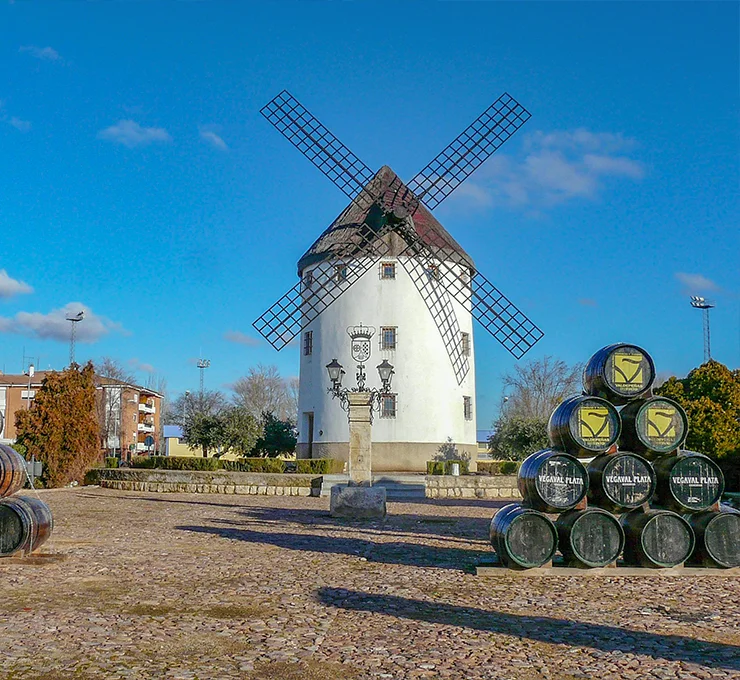
Valdepeñas wine is Spain’s great open secret: a denomination that has been supplying Madrid since the Habsburg kings, that earned its DO in 1932 alongside Rioja, and that still produces Gran Reservas aged over five years for less than you’d pay for a Rioja Crianza. The only thing wrong with it is that almost nobody outside Spain talks about it.
We live just the other side of the Sierra Morena from Valdepeñas. We know these wines. They deserve a proper explanation.
What is Valdepeñas wine?
Valdepeñas is a Denominación de Origen (DO) in the province of Ciudad Real, in the autonomous community of Castilla-La Mancha, central Spain. It sits at around 700 metres above sea level on a limestone plain, almost completely encircled by the much larger La Mancha DO.
The wines are predominantly red — made from Cencibel, the local name for Tempranillo. The style is fruit-forward, approachable, and structured enough to age well in oak. Young reds are cherry-bright and easy-drinking; Crianzas and Reservas add vanilla and spice from American oak; Gran Reservas — the ones aged 60+ months — develop complexity that competes with wines costing three times the price.
There are around 17–25 registered bodegas in the DO, covering approximately 22,000 hectares of vines. It is the second-largest DO by sales volume in Spain after Rioja.
The Wine Train and 500 years of supplying Madrid
When Philip II moved the court to Madrid in 1561, Valdepeñas wine followed. By 1900, 810 of Madrid’s 1,500 tabernas were supplied by the region. From 1895, a dedicated Tren del Vino left every evening at 7 PM — 25 wagons of wineskins — for the capital. At its peak, the railway transported 12,000 wagons a year.
Valdepeñas got its Denominación de Origen in 1932 — the same legislation that recognised Rioja and Jerez. It was feeding a city for 350 years before anyone thought to give it a certificate.
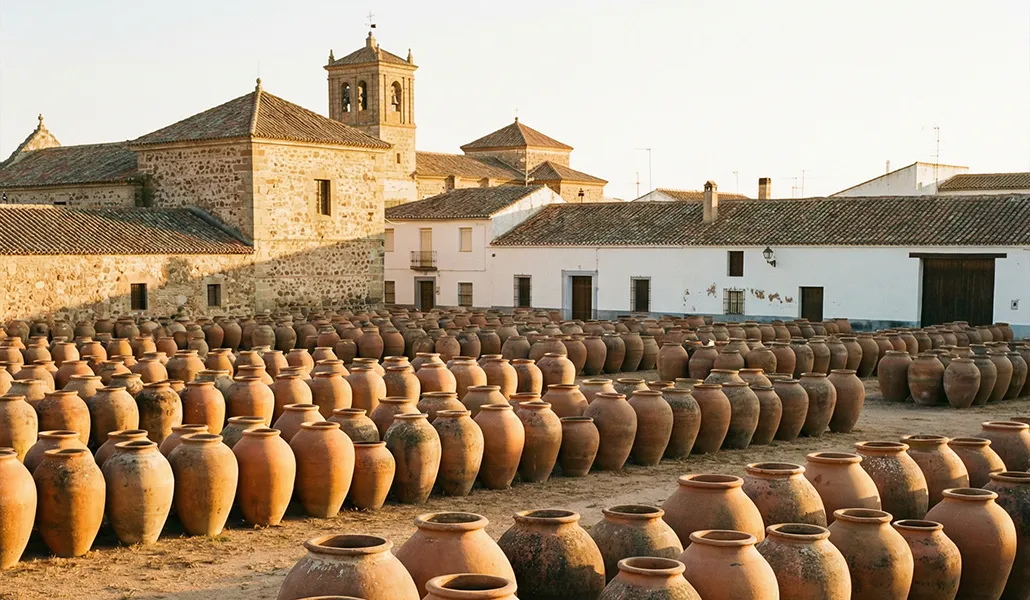
The same wine that stocked Habsburg Madrid now sells for €8 at Tesco. That’s either a tragedy or a bargain. Probably both.
Limestone, extremes, and 2,500 hours of sun
The landscape
Valdepeñas sits at 705 metres above sea level on a limestone plain in Ciudad Real province, about 200 km south of Madrid. The Sierra Morena — our mountains, from Ronda — blocks Mediterranean influence from the south. The result is extreme continental: summers above 40°C, winters below -10°C, rainfall under 400 mm a year.
What makes the wines work is the night. The diurnal shift here reaches nearly 20°C — scorching days, cool nights — and that gap is what keeps acidity and aromatics in the grape. Without it, wines at this latitude would be flat and jammy.
The soils
Limestone dominates — the calcareous subsoil acts as a sponge, absorbing the scarce rainfall and releasing it slowly during the dry growing season. Topsoil is red clay mixed with pebbles, with sandy soils in parts of the denomination, and some gypsum. Poor, low-fertility land: exactly the conditions that make vines work hard and concentrate flavour.
The two historically superior sub-zones are Los Llanos (west) and Las Aberturas (north).
The best Valdepeñas wines to buy right now
This is where things get properly interesting. Valdepeñas aging classifications follow the Spanish system, but the minimum oak requirements are shorter than Rioja — which means the wines are more affordable without being less serious.
| Category | Minimum total aging | Price range |
|---|---|---|
| Joven | None | €3–6 |
| Crianza | 24 months (6 in oak) | €5–10 |
| Reserva | 36 months (12 in oak) | €7–14 |
| Gran Reserva | 60 months (18 in oak) | €8–18 |
A Valdepeñas Gran Reserva has been aged for over five years. The equivalent in Rioja typically costs £25–50 from quality producers. The value gap is real, and it’s consistent.
Value picks (under €12)
Viña Albali Reserva (~€8–10). The benchmark. 100% Cencibel, 12 months in oak, average critic score around 86/100. Berry Bros. describe the style as “silky-textured, vanilla-accented, fruity.” It’s exactly that — smooth, generous, nothing confrontational. The best-selling wine brand in Spanish food retail, and one of the only things Tesco reliably does well in its Spanish section.
Viña Albali Gran Reserva Selección Privada (~€10–15). This is the wine that turns sceptics around. James Suckling scored the 2018 vintage 92 points and awarded 93 points to both the 2011 and the 2010. His note on the 2010: “at least a decade ahead of it.” Won Gran Gold at Vinespaña 2025, Gold at Mundus Vini 2025, and a string of Bacchus medals. Under €15. Aged over five years. There is no rational explanation for this price.
Los Molinos Tempranillo (~€4–5). Also from Félix Solís — the second most appreciated DO wine brand by Spanish households. This is the everyday glass: light, harmonious, full of red fruit. You won’t frame it, but you’ll finish the bottle.
Pata Negra Crianza Valdepeñas (~€6–8). The Valdepeñas Pata Negra — not to be confused with the Rioja Pata Negra — was the original when the range launched in 1978. Ruby red, sandalwood, velvety on the palate. Good pub wine if British pubs stocked Spanish bottles properly.
Mid-range (€12–20)
Pata Negra Reserva Valdepeñas (~€12–18). Average critic scores in the 86–88/100 range. More structured than the Crianza — baked fruit, herb edge, firm but not hard tannins.
Navarro López Viña Trebolar (~€12–18 direct). Wine Enthusiast gave this 89 points — the highest score we found for any Navarro López wine. Old vine Tempranillo from one of the historic city-centre bodegas. Worth seeking out.
Navarro López Para Celsus Organic (~€12–15). 87 points from Wine Enthusiast. Organically grown, showing more restraint than the house style. If you want Valdepeñas with a bit more tension, start here.
The Gran Reserva principle
Spend €15 on a Valdepeñas Gran Reserva and you are buying a wine that has been in a cellar for at least five years. Spend the same on a Rioja and you are buying a Crianza — two years aging. This is not a knock on Rioja. It is simply the clearest possible illustration of where this denomination sits in the value landscape of Spanish wine.
Félix Solís alone has 130,000 barrels in its ageing facility — one of the largest in the world for a family-owned winery.
The main Valdepeñas wineries
The Valdepeñas wine region has around 17–25 active bodegas, but two producers dominate the export market and together account for the overwhelming majority of bottles you’ll find in the UK and northern Europe.
Félix Solís Avantis
Founded in 1952 by Félix Solís Fernández, the winery started in a traditional city-centre building with tinajas sunk into the floor. Today it is one of the largest family-owned wine companies in Spain, with 130,000 barrels in its ageing facilities — among the largest such operations in the world. The main brands are Viña Albali (Reserva and Gran Reserva) and Los Molinos. The company also owns operations in Rioja, Ribera del Duero, and Rueda, but Valdepeñas is where it started and where the value story is most compelling.
The original bodega in the city of Valdepeñas is open for visits. A wine tourism programme includes guided cellar tours and tastings. Worth an hour if you’re passing through on the Madrid–Málaga drive.
Navarro López
One of the oldest bodegas in the city, operating from the historic centre of Valdepeñas. The Viña Trebolar and Para Celsus Organic ranges are the ones to seek out — the latter marking a shift towards lower-intervention viticulture that’s increasingly uncommon at this price level. Wine Enthusiast has consistently awarded both ranges in the 87–89 range.
Navarro López sells direct and offers visits. If you want to see the old tinaja cellars still in use, this is one of the best places to do it.
Beyond the two dominant players, a handful of smaller bodegas are worth mentioning for visitors specifically interested in the Valdepeñas wine region:
- Bodegas Ayuso — Based in nearby Villarrobledo, producing single-variety wines and increasingly focused on the export market.
- Real Divisa — Smaller production, higher emphasis on terroir-led Cencibel.
Bodegas Los Llanos — Named after the sub-zone, one of the historic names in the DO.
Valdepeñas vs La Mancha: the same place, completely different wines
This confuses people, so here’s the short version.
Valdepeñas is almost completely surrounded by the La Mancha DO, but it is not La Mancha. It earned its DO in 1932 — 41 years before La Mancha received its own in 1973. It has a distinct identity, stricter focus on oak-aged reds, and a history of quality that predates the bulk-wine reputation that La Mancha (unfairly or not) carries.
Think of it the way you’d think of Pauillac within Bordeaux — a smaller, historically more reputed enclave within a larger region, with its own stricter standards and style.
La Mancha: approximately 160,000 hectares, historically Airén-dominant, famous for bulk white wine and distillation. Valdepeñas: 22,000 hectares, Cencibel-dominant, with a Crianza/Reserva/Gran Reserva tradition that few regions in Spain match at this price point.
As Jancis Robinson writes in the Oxford Companion to Wine: “Valdepeñas has developed a reputation for quality over and above its larger neighbour.”
The grapes: Cencibel and the wine that EU bureaucracy killed
Cencibel
Cencibel is Tempranillo — the same grape as Rioja, just called by its Castilian name here. It accounts for 86% of red wine plantings and must make up at least 75% of any red wine in the DO.
The style is fruitier and rounder than Rioja. The extreme summer heat ripens the grape fully; the cool nights preserve freshness. Less natural acidity, softer tannins, more immediate fruit. Approachable young, but with enough structure to age. Some producers add Cabernet Sauvignon — a combination that has been gaining traction since the late 1990s.
Airén, the white grape, covers roughly 65% of all vines — drought-tolerant, planted everywhere after phylloxera hit around 1911. At its peak circa 2000 it was the most planted grape variety on the planet by surface area. Made well with cold fermentation it produces honest, light whites — green apple, pear, citrus. Nothing transcendent, but fine in summer at the prices charged.
The aloque
The traditional wine of Valdepeñas was neither red nor rosé. The aloque (from Arabic, meaning “light red”) was a co-fermentation of 80–90% white Airén and 10–20% red Cencibel in the same clay tinaja — producing a pale pinkish-red with freshness and charm. This is what stocked Madrid’s tabernas for four centuries.
When Spain joined the EU in 1986, the classification didn’t fit the European framework. By 2006, it had disappeared from the DO’s regulations entirely. A wine that survived the Caliphate, the Reconquista, and two world wars was killed by a regulatory category. Some producers are quietly reviving the idea — but the original is gone.
What to eat with Valdepeñas wine
The pairings below aren’t theory. These are the dishes eaten in the same landscape that produced the wine.
Pisto manchego with a fried egg — tomatoes, peppers, courgette and olive oil, slow-cooked until silky. A glass of Joven alongside it is a summer lunch. This is the dish. Don’t overthink it.
Gazpacho manchego — nothing to do with the cold Andalusian soup. This is a hot, hearty stew made with game meat (rabbit, partridge, hare) and unleavened flatbread (tortas cenceñas) crumbled directly into the broth. Pimentón, thyme, cloves. The gelatinous richness of game needs the tannins of a Crianza or Reserva to balance it.
Queso Manchego — the terroir match. Sheep graze the same land as the vines. Semicurado (3 months) with a Joven, curado (6–9 months) with a Reserva, añejo (12+ months) with a Gran Reserva. That’s it. That’s the guide.
Cordero asado — roast lamb, especially suckling chops (chuletillas de cordero lechal). Matches a Reserva perfectly — the fruit of Cencibel holds its own without overpowering the meat.
Migas manchegas — stale bread fried golden with olive oil, garlic, pimentón, chorizo, and bacon. A shepherd’s dish, traditionally served with fresh grapes as a contrast. One of those combinations that makes no aesthetic sense and tastes extraordinary.
What does Valdepeñas wine taste like?
Valdepeñas reds are fruit-forward and approachable — fresh cherry and strawberry from young wines, moving towards plum, vanilla, and a soft spice in Crianzas and Reservas. The style is rounder and less structured than Rioja, with softer tannins and more immediate fruit. Gran Reservas develop genuine complexity — dried fruit, leather, tobacco — at a price point that makes them extraordinary value.
Is Valdepeñas wine good quality?
Yes, particularly in the Reserva and Gran Reserva categories. James Suckling awarded 92–93 points to multiple Viña Albali Gran Reservas. Wine Enthusiast has scored Navarro López wines up to 89 points. The quality at the price level — often under €15 for a five-year-aged wine — is difficult to match anywhere in Spain.
What grape is used in Valdepeñas wine?
The dominant red grape is Cencibel — the local name for Tempranillo, the same grape used in Rioja. It accounts for approximately 86% of red wine plantings and is legally required to make up at least 75% of any red wine in the DO. The main white grape is Airén, which covers roughly 65% of total vine plantings.
What is the difference between Valdepeñas and La Mancha wine?
Valdepeñas is a smaller, distinct DO (22,000 ha) that earned recognition in 1932 — 41 years before La Mancha DO. It focuses on oak-aged reds from Cencibel (Tempranillo), whilst La Mancha (160,000 ha) has historically produced bulk whites from Airén. The quality focus, regulatory requirements, and style of Valdepeñas reds are meaningfully different from generic La Mancha wine.
How does Valdepeñas compare in price to Rioja?
Substantially cheaper for the same aging category. A Valdepeñas Gran Reserva (minimum 5 years aging, 18 months in oak) typically costs £8–18 in the UK. The equivalent Rioja Gran Reserva from a quality producer costs £25–50+. A Valdepeñas Reserva (3 years aging, 12 months in oak) can be found for under £10 — less than most Rioja Crianzas.
Can I visit the Valdepeñas wine region?
Yes, and it’s easier than most. The city of Valdepeñas is 215 km south of Madrid — two hours by road on the A-4. Félix Solís and Navarro López both offer bodega visits and tastings; several others in the region are open by appointment. The town also has a wine museum (Museo del Vino) in the old Bodega Municipal, worth an hour.
Where can I buy Valdepeñas wine in the UK?
Viña Albali Reserva is stocked by Tesco and available through Wine-Searcher from multiple UK retailers. Navarro López wines can be ordered direct or found via specialist Spanish importers. Berry Bros. & Rudd periodically lists Valdepeñas wines. The Gran Reservas — the best value proposition — are less common on supermarket shelves but consistently available online.