Montilla-Moriles Wine Region
Often overlooked, Montilla is the true origin of much of the PX behind sherry — and likely the reason the word ‘amontillado’ exists in the English language at all. The wines are near-identical to the best of Jerez, the prices are a fraction, and the crowds haven’t arrived yet.
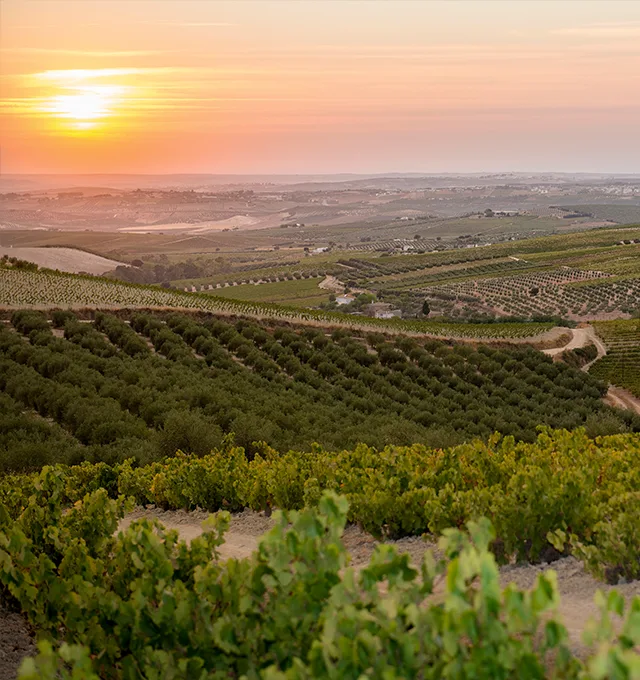
What is Montilla-Moriles?
A DO wine region in Córdoba province, Andalusia. Centred on the town of Montilla, about 35 minutes south of Córdoba city by car, and 1 hour 15 minutes north of Málaga.
It makes the same styles as sherry — Fino, Amontillado, Oloroso, Palo Cortado, Pedro Ximénez — using the same solera ageing system. The differences:
- The grape is Pedro Ximénez, not Palomino. Richer, more expressive, more sugar-dense.
- Most wines aren’t fortified. PX naturally ferments to 15% ABV in the Andalusian heat. Jerez has to add spirit to get there.
- The result is rounder and fuller than sherry — less austere, slightly more fruit.
Think of it as sherry’s inland twin: similar process, different character, a fraction of the price.
The best introduction to the region doesn’t happen in a tasting room. It happens in Aguilar de la Frontera every spring, at the Cata Popular de Vinos de Montilla-Moriles — which holds the Guinness World Record for the largest guided wine tasting on earth. Hundreds of tables, thousands of locals with a copita in hand. You walk in not knowing what to expect and leave with a fairly strong opinion on amontillado.
The wines
Distinct styles are produced here. From the bone-dry fino to the near-black PX, the range is wider than most people realise.
Fino
Pale, nutty, saline. Dry as it gets. Serve it very cold with fried fish or jamón.
What sets Montilla fino apart from Jerez is body — the flor here grows thinner, consumes less of the wine’s natural glycerol, and leaves more texture behind. More fruit, more structure. Less austere.
Oloroso
Fully oxidative from the start — no flor, no biological ageing. Just the wine and the air, for years.
Dark mahogany, balsamic, walnut, caramel, dried fruits. Rich but dry, with a velvety texture that builds slowly. 18–19% ABV. It’s the most straightforwardly powerful of the dry styles — none of the delicacy of fino, none of the intellectual complexity of amontillado. What it has instead is weight and warmth.
Palo Cortado
The rarest style — only 1–2% of pressed wines ever become one. It starts as a fino, then the flor dies unexpectedly. The cellar master crosses out the chalk mark on the cask: palo (stick) cortado (cut).
The result: the nose of an amontillado — orange zest, leather, tobacco — with the body and richness of an oloroso. Complex in a way that neither style achieves alone.
Amontillado
The style literally named after this region — amontillado means “in the style of Montilla”. Amber, hazelnuts, dried orange peel, a saline bitterness that goes on for minutes.
Ask a local winemaker which is the greatest wine style in the world and they will not hesitate. One I spoke to: “Yo siempre digo que el rey de los vinos generosos
es el amontillado. No hay un vino que supere a un buen amontillado para el catador. No hay en el mundo.” Not Burgundy, not Barolo. Amontillado. From here.
Pedro Ximénez
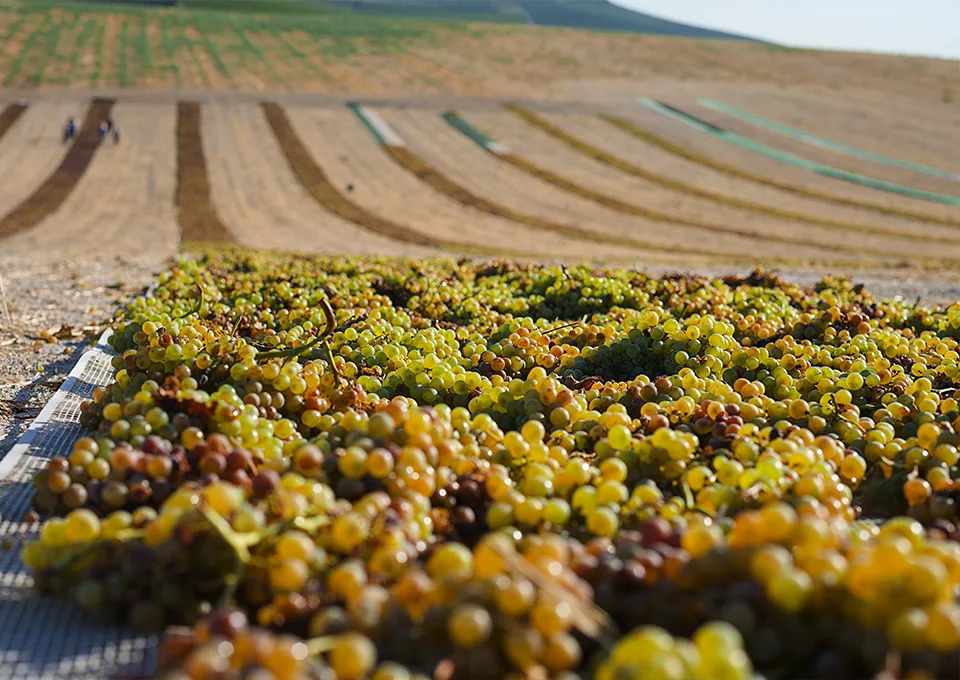
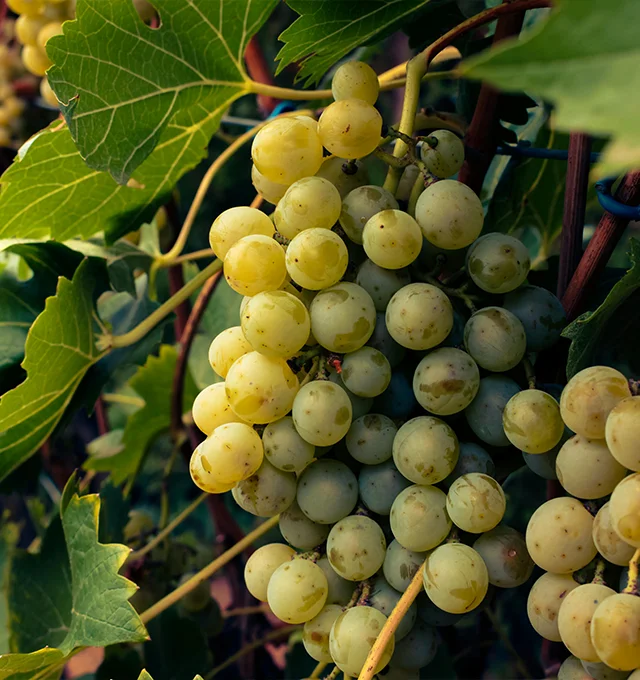
After harvest — which happens in the punishing first weeks of August, pickers starting before dawn — PX grapes are spread on esparto grass mats in the open air. Sun temperature at ground level: 50–55°C. After 15 days, they’re raisins. The resulting wine can contain 450 g/L of residual sugar. Dry wine has less than 4.
Figs, dark chocolate, espresso, dates, molasses. What separates a great Montilla PX from a good one is the acidity underneath — without it, all that sugar becomes cloying. With it, it keeps pulling you back.
Pour it cold over vanilla ice cream. It works.
What to eat with it
The Consejo Regulador has a rule of thumb that holds up:
- If it swims → Fino. Fried fish, langostinos, anchovies, jamón ibérico, salmorejo. Very cold, 7–9°C.
- If it flies → Amontillado. Roasted chicken, mushroom dishes, aged Manchego, oxtail. Room temperature, 12–14°C.
If it runs → Oloroso. Lamb, beef stews, rabo de toro, game, spiced meats. 13–16°C.
Palo Cortado sits somewhere between the last two. Cecina de León, foie, blue cheese, anything with artichoke.
Pedro Ximénez: the vanilla ice cream combination is not a gimmick. Pour it cold, directly from the bottle, over good vanilla ice cream. It works as a dessert course on its own. Also: Cabrales or Roquefort, dark chocolate, Christmas pudding. Any fruit with real acidity — strawberries, kiwi — cuts through the sweetness and makes the whole thing brighter.
Why does Jerez get all the credit?
Geography, mostly. Jerez sits near a major Atlantic port. British merchants set up shop there in the 18th century, shipped the wines home, and built global brands. Montilla is landlocked, and its producers historically sold in bulk to Jerez rather than exporting directly.
The irony: much of what Jerez sold was made from Montilla raw material — especially PX. Pedro Ximénez barely grows in Jerez because the Atlantic humidity makes sun-drying the grapes risky (they can rot overnight). Montilla’s dry inland heat is ideal. According to importer Jorge Ordóñez, 99% of the PX used in Jerez soleras is purchased from here.
And the word “amontillado” is in every wine list in the world. First recorded in English in 1822.
Worth visiting?
Yes, especially if you’re already in Córdoba or travelling between Málaga and Sevilla.
- Founded 1729
- Montilla town centre
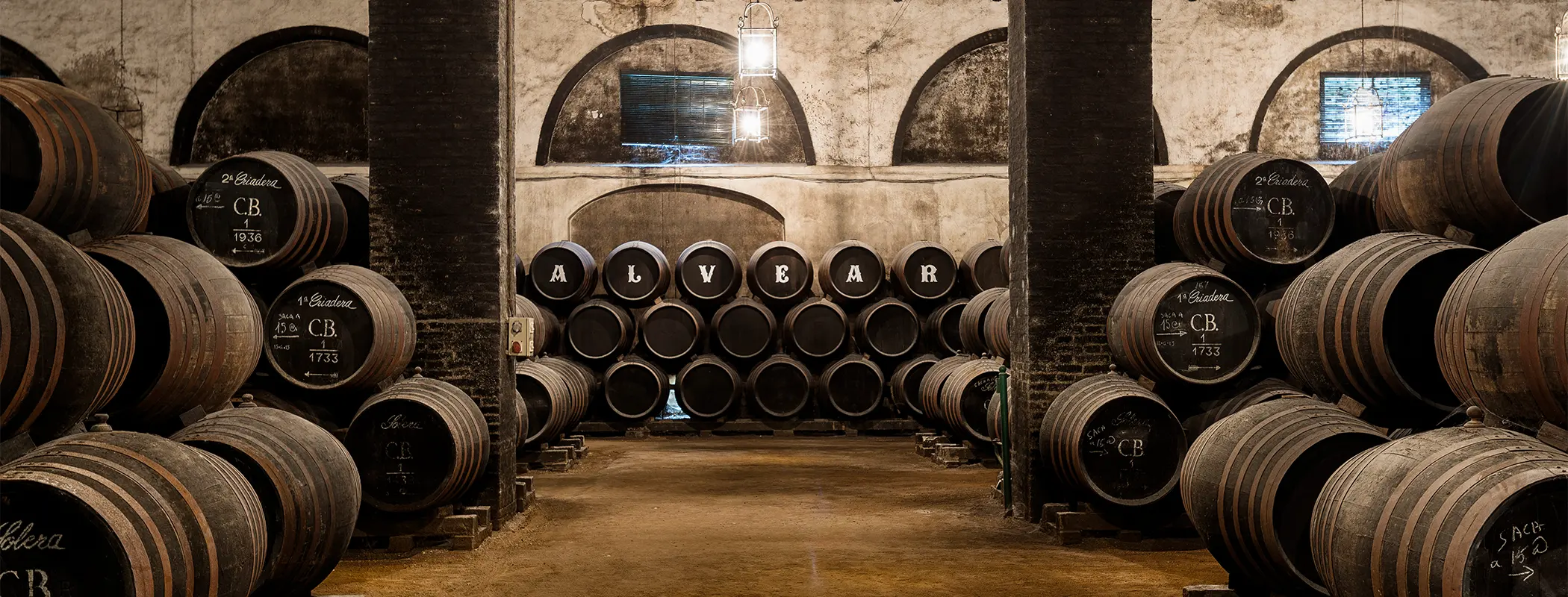
Bodegas Alvear
Founded in 1729, Alvear is the oldest winery in Andalusia — and one of the oldest family-owned wineries in Spain. Nearly three centuries later, it’s still run by the same family, now in its eighth generation.
The wines are the benchmark for the region: the Fino CB is the reference fino, the PX Solera 1927 (Parker 98) draws from a solera that contains wine going back almost a century, and the PX Añada 2011 received 100 Parker points — the highest score ever given to a Montilla wine.
- Experience types: standard tasting, 5-wine tasting, vineyard tour in Sierra de Montilla, immersive legacy experience, olive mill + bodega, town tour + bodega
- Key wines: Fino CB, Palo Cortado N7, PX Solera 1927 (Parker 98), PX Añada 2011 (100 Parker points), Viejísimo Amontillado (from soleras started ~1738)
- Founded 1922
- Aguilar de la Frontera
Bodegas Toro Albalá
The destination for anyone serious about old wine. Installed in a restored early 20th-century electric power station in Aguilar de la Frontera — 14,000 m² of cellars. They hold vintage PX going back to the early 1900s. The Don PX Convento Selección 1946 was the first sweet wine in history to receive 100 Parker points.
- Founded 1905
- Montilla
Bodegas Pérez Barquero
The great amontillado house. The only Montilla bodega to receive 100 Parker points twice — both times for the Amontillado 1905 Solera Fundacional. One of just 16 Spanish wineries ever to achieve that.
- Founded 1927
- Montilla outskirts
Bodegas Robles
The organic producer — the first in Andalusia to make the switch, certified by CAAE since 2001 in collaboration with the University of Córdoba. Family-run, unhurried, and good for kids, with visits priced at €20/person (VAT included) for a minimum of 4 people; reservation required 2–3 days ahead.
- Founded 1994
- Moriles Alto sub-zone
Bodegas El Monte
Smaller and less visited than the four above — which is exactly the reason to go. Located in the Moriles Altos sub-zone, the premium albariza terroir. Night harvesting by hand, single-parcel tinaja wines, and the first enotourism activity ever offered in Moriles.
The Cata Popular de Vinos in Aguilar de la Frontera (typically spring) is the easiest entry point and the most memorable. The Cata del Vino Montilla-Moriles in late April in Córdoba (2026: 22–26 April) is a more accessible alternative — 20+ bodegas along the Guadalquivir riverbank, tastings for around €24.
Getting there
- From Córdoba: 35 minutes by car, or ~40 minutes by bus (~€4–9).
- From Málaga: 1 hour 15 minutes north on the A-45.
- Fly into Málaga (AGP) or Sevilla (SVQ) — both have UK connections. Córdoba Airport is not practical for international travel.
A car helps once there. The bodegas are spread across multiple villages.
Best months: April–June or September–October. Avoid July–August — harvest happens then, which is interesting to know, but it is genuinely brutal. The pickers are out before 6am for a reason.
Is Montilla-Moriles the same as sherry?
Not legally — EU law reserves the name “sherry” for wines from the Jerez DO in Cádiz. But the styles are nearly identical: Fino, Amontillado, Oloroso, PX. The main differences are the grape (Pedro Ximénez vs Palomino), the fact that Montilla wines mostly reach 15% ABV without fortification, and a rounder, fuller character in the finished wines.
Why is it called "amontillado" if it's a sherry style?
Because the style comes from Montilla. “Amontillado” means “in the style of Montilla” in Spanish. When Jerez adopted the technique in the 18th century, they named it after its origin. First recorded in English in 1822. Montilla has been mildly irritated about the attribution ever since.
Where does PX sherry actually come from?
Mostly from Montilla-Moriles. Pedro Ximénez barely grows in Jerez because Atlantic humidity makes sun-drying risky. EU law even allows Montilla PX to be labelled “PX Sherry” after two years in a Jerez cellar. According to importer Jorge Ordóñez, 99% of the PX used in Jerez soleras is purchased from Montilla-Moriles.
What does Pedro Ximénez taste like?
Near-black, thick, intensely sweet — up to 450 g/L of residual sugar. Figs, dark chocolate, espresso, dates, molasses, with a thread of acidity that stops it feeling heavy. The grapes spend 15 days drying in sun that reaches 50–55°C at ground level. Pour it cold over vanilla ice cream. It works.
Where can I buy Montilla-Moriles wines in the UK?
Ultracomida (ultracomida.co.uk) for Alvear and Robles. Vintage Wine & Port (vintagewineandport.co.uk) for Toro Albalá — exclusive UK stockist. Vinceremos for organic Robles. Vinissimus (vinissimus.co.uk) for the widest range including Pérez Barquero.