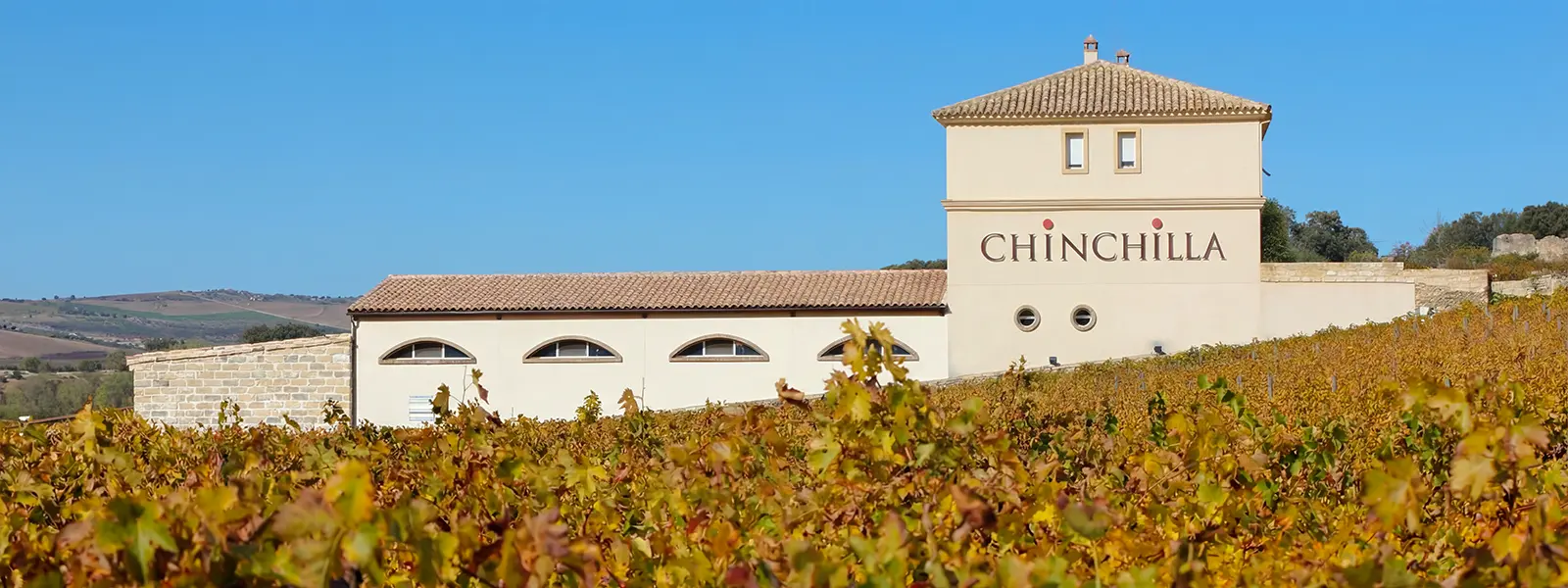
The Winery
Founded in 1999 by José María Losantos and Gema Alonso on land that Romans were farming for wine in the 1st century BC, it’s one of the most awarded bodegas in Andalucía and one of the least flashy to visit. A family property at 840 metres, 25 kilometres from town, surrounded by vineyards and the silence of the Serranía de Ronda.
Essentials
- Founded: 1999
- Location: Cordel del Puerto al Quejigal s/n, Ronda
- Altitude: 810–950m
- Estate: 50 hectares
- DO: Sierras de Málaga
- Best Cabernet Sauvignon in the World
The Chinchilla wines
Doña Felisa produces 14 different wines under the Chinchilla label — more than any other winery in the Serranía de Ronda. The range spans everything from an €12 young red to an €81 limited-release Petit Verdot. Here’s the full picture.
Red wines
The range starts with the easy, unoaked Encaste Cosecha, followed by the lightly oaked Chinchilla Roble, and builds up to Seis+Seis — the bestseller and an ideal entry point. Doble Doce is the standout wine to take home, having won Best Cabernet Sauvignon in the World in Paris in 2014 and 2016. Beyond that is the Encaste Crianza, offering more structure, and at the top sits Mercure, made from some of the oldest Petit Verdot vines in Spain — a serious collector’s red and one of Ronda’s finest.
White wines
Cloe Chardonnay is an easy, approachable starting point: partially oaked, with tropical fruit, a hint of vanilla, and a natural pairing for fish and shellfish. Moving up, Ciudad Secreta Blanco is also made from Chardonnay, but from 950-metre vineyards at Viña Amaya and fermented in concrete egg tanks — giving it more minerality, texture, and a clearly different profile from Cloe. At the top of the range is Markíss, a premium white: 100% Sauvignon Blanc from 900-metre vines, aged in 500-litre Hungarian oak barrels.
Rosé
The Cloe Rosé (100% Garnacha, direct press) is pale, clean, and unpretentious. White flowers, small red fruits, a little citrus. Good with tapas or on the terrace, not trying to be anything more than that.
Sparkling
The Cloe Brut Nature is, according to Julia Losantos, the first traditional-method sparkling wine produced in Ronda. Getting Sauvignon Blanc to work in this format required real technical development. Fresh, fine bubbles, toasted brioche.
Sweet
The BF Maestro is the highest-scoring wine in the entire range on Guía Peñín: 89/100. Made using the traditional vino maestro technique — a slow fermentation of up to 60 days, arrested by cold. If you’re doing the pairing experience, order it with dessert.
Visiting the winery
Three options, all by appointment only, all daily at 11:30 AM:
Tasting only — €35 per person. Three wines with a selection of tapas. Around 30 minutes. Best for return visitors who’ve done the tour before and just want to try current releases.
Guided tour with tasting — €38.50 per person (children 5–16: €20, under 5 free). Vineyard walk, production rooms, tasting room, four wines with tapas. Officially 90 minutes, but regularly stretches to two or two-and-a-half hours. Conducted in English and Spanish. This is what most visitors do, and most reviews suggest it’s worth every minute.
Wine pairing experience — €69 per person. Full tour plus five wines matched to a substantial meal of local products. Expect Iberian sausages, Payoyo cheese, foie gras with chocolate, and more. Multiple visitors describe it as “one of the best meals we had in Spain”.
Getting there
Take the Ronda–Sevilla road for 25.5 km, turn at the sign for “Taller Bodega Doña Felisa Chinchilla” onto the Ronda la Vieja–Setenil road, continue 4.2 km to a second sign, then follow the unpaved track for 2.5 km. Total: approximately 30 minutes from Ronda centre. The last stretch of dirt road can be difficult after heavy rain — worth checking with the winery in winter.
Staying overnight
The winery has four suites, available from around €180 per night, overlapping the vineyard and the Grazalema mountains. Check-in noon to 3 PM, check-out noon. Complimentary wine included. Ranked the fifth-highest B&B in Ronda on TripAdvisor with a 4.8 rating.
A plot with two thousand years of history
The Chinchilla area sits about 25 kilometres north of Ronda on the road towards Sevilla, in the municipality of Arriate. The original finca — the one planted in 1999 — is at 840 metres above sea level, with a northwest orientation and sandy-loam soils with limestone beneath. Today the estate spans four named properties across 50 hectares, with the highest plots — the 22-hectare Viña Amaya — at 950 metres, next to the ruins of the Roman city of Acinipo.
Acinipo is not incidental context. The city, occupied from the 1st century BC to the 3rd century AD with a peak population around 5,000, was a significant wine-producing and exporting centre. Its very name is thought to derive from the Latin acinus — grape — and the city minted its own coins bearing triple grape bunches around 56–53 BC. Wine from this land was exported throughout the Roman Empire via the port of Málaga. Pliny and Ptolemy both wrote about the settlement.
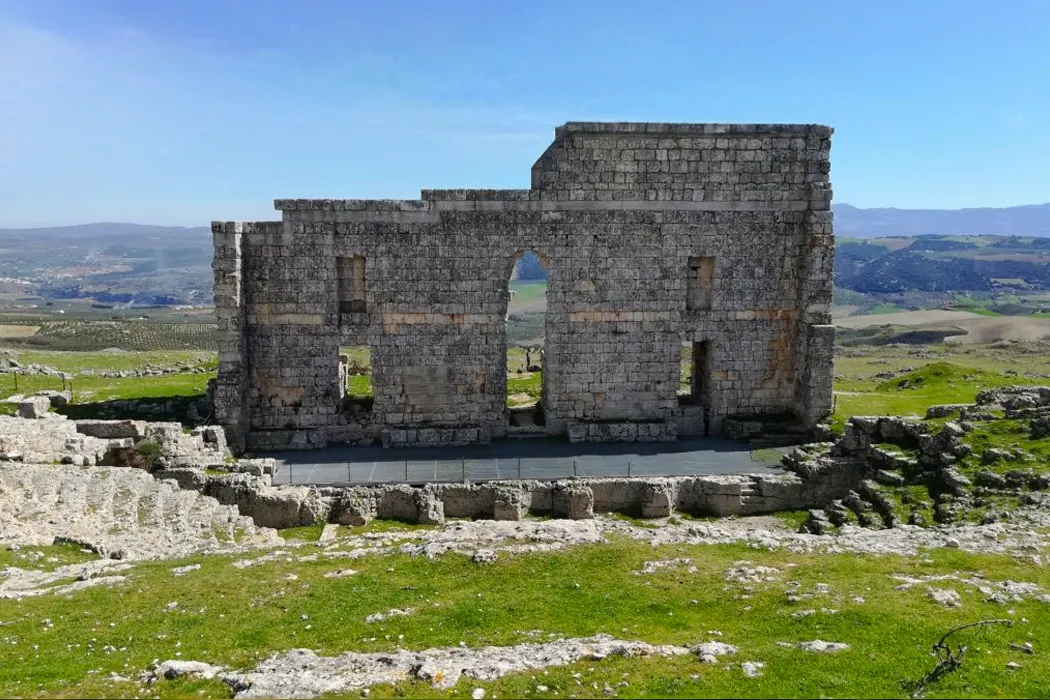
Doña Felisa maintains a small museum of Roman-era artefacts discovered on the land — coins, pottery fragments, arrowheads — donated over the years by local farmers. Visitors mention it regularly as an unexpected highlight of the tour. José María has noted: “The Romans knew what they had when they produced wine here two thousand years ago, and we are lucky that we get to rediscover it all over again.”
The terroir
What makes Chinchilla work for wine is the combination of altitude, soil, and a climate caught between two seas. The Atlantic comes in from the west, the Mediterranean from the east. The result is a diurnal temperature swing of up to 20°C — hot days that ripen the fruit, cold nights that preserve the aromas and acidity. The soils are sandy with limestone in the lower horizons: good drainage, decent water retention, and the mineral character that shows in the wines.
How the wines are made
The winery calls its approach integrated viticulture — no herbicides or synthetic products, all work in the vineyard by hand. Every harvest is done at night, with grapes arriving at the cellar in boxes of no more than 15 kilograms to prevent crushing. José María personally supervises reception and sorting. Each variety is vinified separately in stainless steel before ageing decisions are made.
The whites receive night harvesting specifically to preserve aromatic compounds that degrade rapidly in daytime heat. All wines are vegan. The new Viña Amaya winery will add ovoid concrete tanks (egg-shaped fermenters), an Osiris CO₂-powered pump-over system, and a dedicated sparkling wine line.
The new Viña Amaya winery is coming in 2026
The family is investing €4 million in a new facility at the Viña Amaya estate. The new winery is designed to run entirely off-grid on 300 solar photovoltaic panels and will target an annual production of 400,000 bottles. It will include dedicated lines for sparkling wine production, ovoid concrete fermenters, and — eventually — expanded wine tourism infrastructure. The project has been confirmed across multiple sources, with opening expected by late 2026.
FAQ
What is Bodega Doña Felisa?
Bodega Doña Felisa is a family-owned winery in the Chinchilla area of the Serranía de Ronda, founded in 1999 by José María Losantos and Gema Alonso. All wines are sold under the Chinchilla label. The winery is known for the Doble Doce red, which won Best Cabernet Sauvignon in the World at the Concours International des Cabernets in Paris in 2014 and 2016 — the first Spanish wine to receive this award.
Where is Bodega Doña Felisa?
The winery is located in the Chinchilla area, approximately 25 kilometres from Ronda on the road towards Sevilla, in the municipality of Arriate (Málaga province). It sits at 840 metres above sea level, within the DO Sierras de Málaga — Serranía de Ronda subzone. The last 2.5 kilometres from the main road is unpaved.
How do I book a visit to Doña Felisa?
Contact the winery directly via enoturismo@bodegadonafelisa.com or by phone at +34 606 945 937. Booking at least 96 hours in advance is required. Tours run daily at 11:30 AM. The standard guided tour with tasting costs €38.50 per adult and lasts approximately 90 minutes to two hours. The wine pairing experience (€69) includes a full meal.
What wines does Doña Felisa produce?
The Chinchilla range includes reds (Encaste Cosecha, Chinchilla Roble, Seis+Seis, Encaste Crianza, Doble Doce, Mercure), whites (Cloe Chardonnay, Ciudad Secreta Blanco, Markíss), rosé (Cloe Rosé), sparkling (Cloe Brut Nature — the first traditional-method sparkling wine made in Ronda), and a sweet Moscatel (BF Maestro). 14 wines in total.
What is the Mercure wine?
Mercure is Doña Felisa’s premium red — 100% Petit Verdot, aged 18 months in French oak, made from what the winery claims are the oldest Petit Verdot vines planted in Spain. Only 1,800 bottles are produced annually. It is reportedly the most expensive wine in the entire DO Sierras de Málaga denomination, priced at approximately €81 per bottle.
How does Doña Felisa compare to other Ronda wineries?
Doña Felisa is the most internationally decorated winery in the Serranía de Ronda and produces the widest range of wines (14 references). Its owner José María Losantos is president of the DO Málaga regulatory council. Other notable estates in the area include Friedrich Schatz (the original pioneer, organic), Descalzos Viejos (housed in a 16th-century convent), and Cortijo Los Aguilares (similar altitude, strong Petit Verdot).