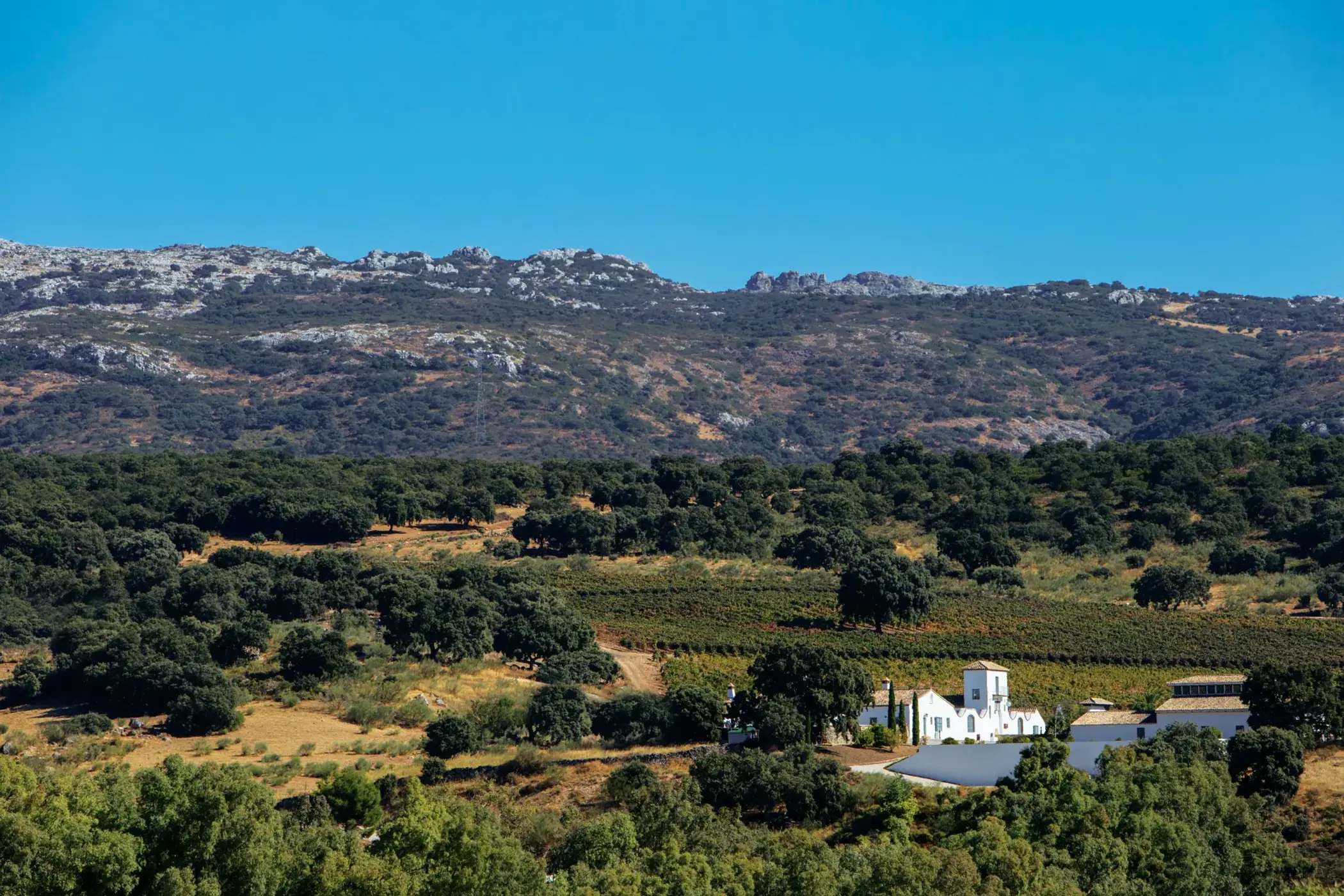
Before phylloxera arrived in Málaga in 1878, the Serranía de Ronda had nearly 13,500 hectares of vines and dozens of indigenous grape varieties. Most of those varieties simply ceased to exist. La Melonera has made bringing them back its central project.
Working from an 1807 ampelographic survey of Andalusian varieties and in collaboration with the Rancho de la Merced research centre in Jerez, they’re cultivating Tintilla de Rota, Blasco, Romé, Melonera, Perruna — grapes that haven’t been in commercial production for over a century. The Melonera grape has melon-striped skin. It names the estate. It nearly disappeared forever.
Their Payoya Negra won gold at the Challenge International du Vin. It tastes like nothing else produced in Spain, because nothing else like it exists in Spain. In 2008, the bodega hosted a symposium attended by Jancis Robinson, Michel Rolland, and Peter Sisseck. That visit put Ronda on the international wine map.