Cortijo Los Aguilares
The southernmost continental Pinot Noir in Europe is made five kilometres from Ronda, on an 800-hectare estate.
Cortijo Los Aguilares sits on the Ronda–Campillos road, five kilometres outside town, at the foot of the Sierra de las Nieves. If you’ve been to Ronda and had dinner somewhere decent, there’s a reasonable chance you’ve already drunk their wine without knowing it — they’re everywhere on local wine lists.
The bodega produces nine wines, including a Garnacha, a Graciano, and a Petit Verdot aged in clay amphorae. But the one people come to talk about — the one that’s won three gold medals at the Mondial des Pinots and caught the attention of Jancis Robinson — is a Pinot Noir. Planted at 900 metres above sea level. In Andalusia. At the same latitude as Tunis.
You’d be forgiven for thinking that sounds like a terrible idea. It isn’t.
The Winery
Founded: 1999
Location: Ctra. Ronda–Campillos, km 35, Ronda, Málaga
Altitude: ~900m above sea level
Vines: 25–30 hectares, organic (CAAE certified)
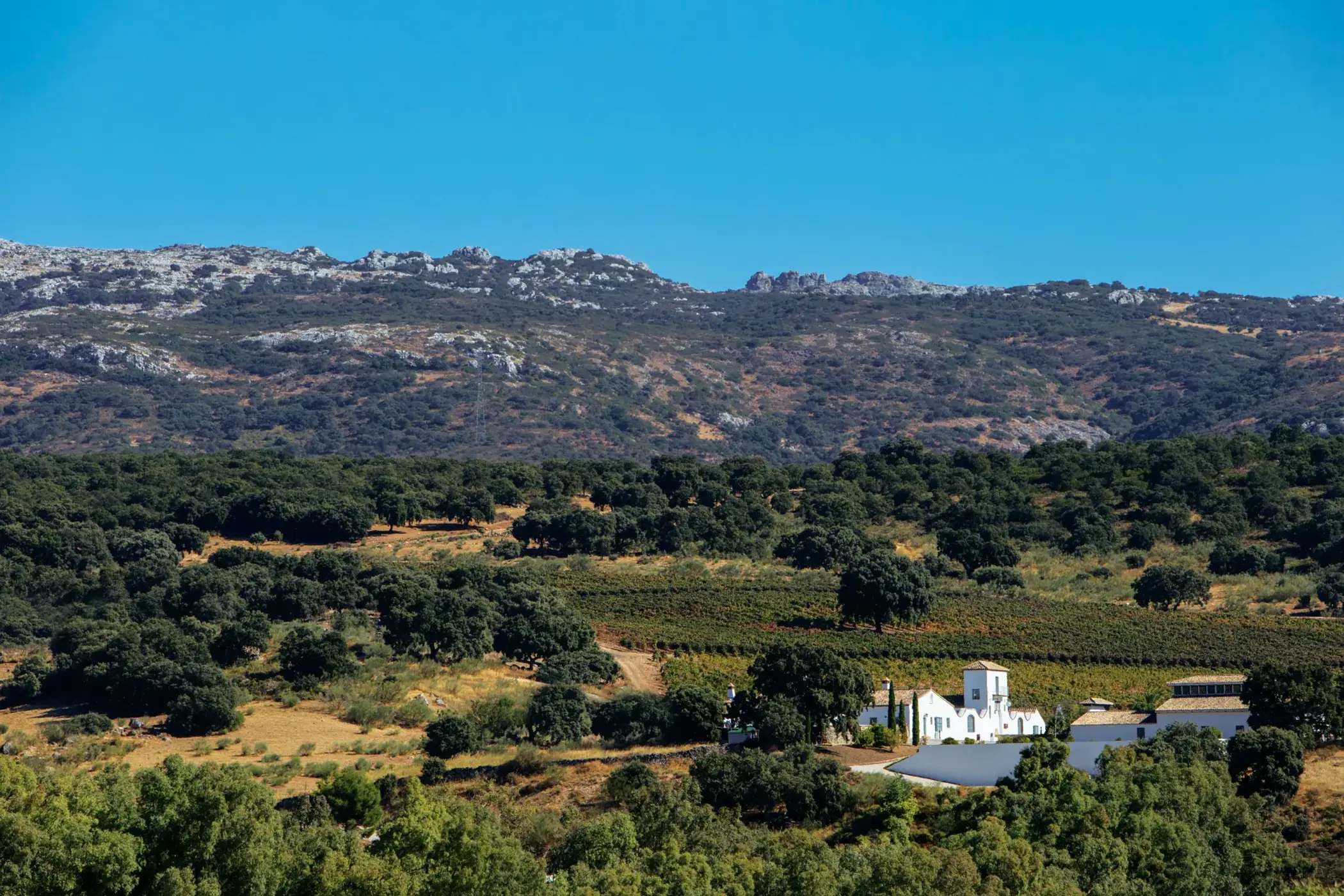
The story starts with a man named José Antonio Itarte San Gil, a Basque tech entrepreneur who co-founded SALTO Systems — a global access control company — and spent his leisure time falling deeply in love with Burgundy. In 1999, he bought an 800-hectare estate outside Ronda. He didn’t plant a commercial development or a holiday resort. He planted vines.
His logic was simple and a little romantic: if Burgundy could make Pinot Noir great, and if this mountain valley shared some of that altitude and diurnal temperature variation, why not try? He brought in Juan Manuel Vetas, now considered something of a founding father of the Ronda wine revival, to help plan the vineyard. Early winemaking guidance came from Telmo Rodríguez — one of Spain’s most respected winemakers, whose family had a longstanding friendship with the Itartes.
In 2007, Bibi García became Technical Director. She’s the person who shaped everything you’ll taste today: the double-harvest technique on the Pinot Noir, the decision to try amphorae for the Petit Verdot, the launch of the first white wine in 2024. She’s been here ever since, and the wines show it — there’s a consistency and a clear point of view across the whole range.
José Antonio died in 2020. His wife Victoria San Gil continues the project. In March 2024, the winery launched its first-ever white wine — Breñal — at the Museo Picasso in Málaga. It had been his dream for years. He didn’t get to see it, but it exists now.
The Terroir — And Why Altitude Changes Everything
The estate is a member of Grandes Pagos de España — a group of 32 single-estate wineries that are widely considered to represent the country’s finest terroir-driven wines. That membership matters, because it tells you something about how seriously the viticulture here is taken.
Here’s why the location is unusual. Southern Spain is hot. Summer temperatures regularly exceed 35°C in the lowlands. That’s not Pinot Noir country by any conventional measure — Pinot Noir is a finicky grape that needs a long, cool growing season to develop complexity without losing freshness.
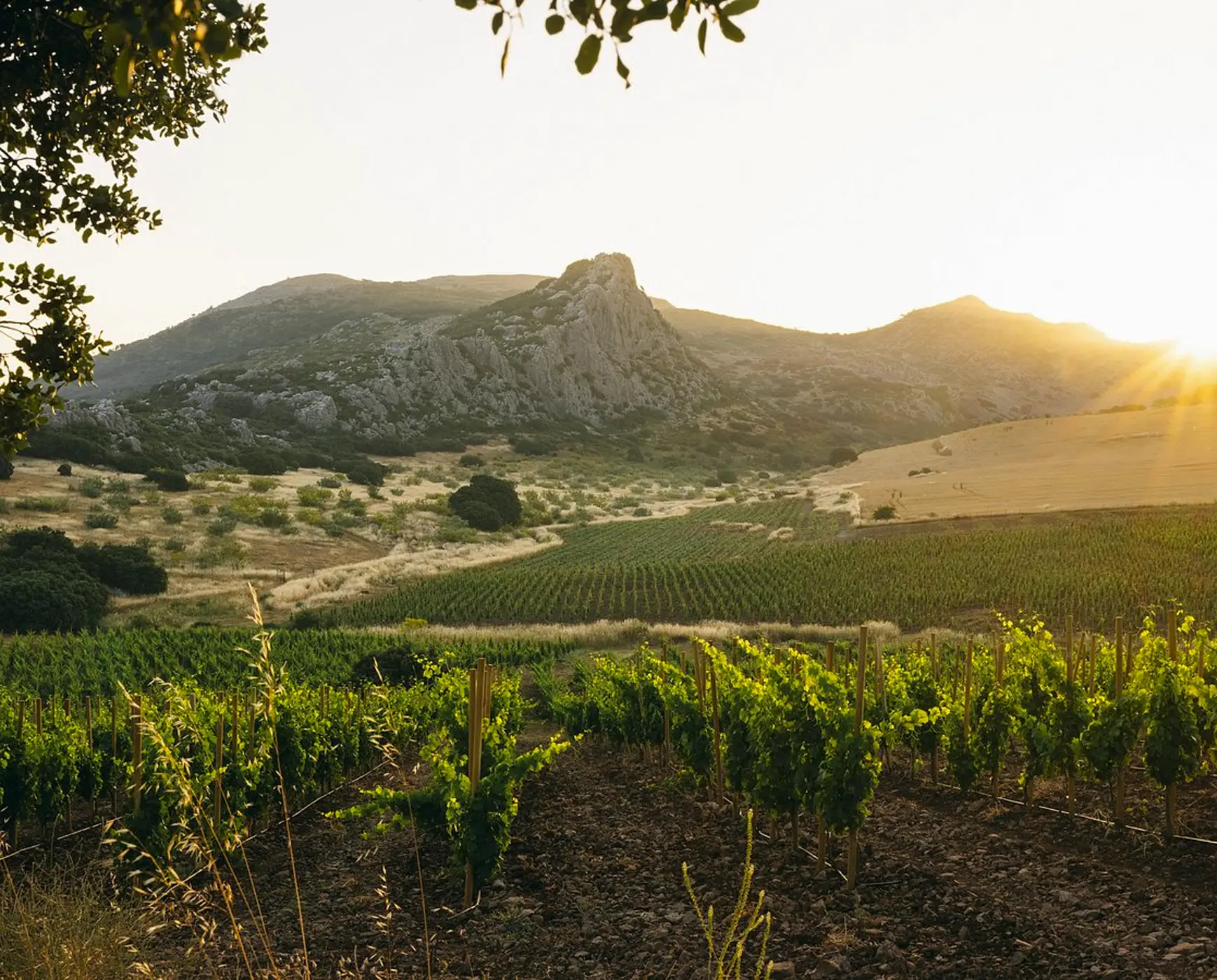
What Cortijo Los Aguilares has, at 900 metres, is a 20°C diurnal temperature variation — meaning the difference between daytime highs and nighttime lows is significant enough to slam the brakes on ripening every evening and preserve acidity. It also gets 700–900mm of annual rainfall — relatively generous for southern Spain — from its position between the Sierra de las Nieves National Park and the Atlantic-influenced air that comes through from the coast.
The soils are clay-limestone with chalky subsoil — something Burgundy growers would recognise immediately.
The double-harvest technique
This is the detail that makes the Pinot Noir work, and it’s worth understanding. Bibi García and her team pick the vineyard twice: first, an early harvest of grapes that still have good acidity; then, almost two weeks later, a second pass to collect the riper fruit and include some whole bunches in fermentation (which adds complexity and structure). The two lots are vinified separately and then blended.
The result is a wine that has both freshness and depth — not easy at this latitude. Fermentation happens at a carefully controlled 25°C. The wine goes into aged French oak (300L and 500L casks) and concrete eggs for eight months. They don’t crush the grapes. The touch is deliberately light.
“We don’t crush grapes, macerations are short, and we barely touch the grapes,” Bibi García told Guía Peñín.
Only three hectares are planted with Pinot Noir. They produce roughly 10,000 bottles in a good year. In 2017, they produced none — Bibi decided the vintage didn’t meet the standard. That’s not something you do if you’re just trying to shift bottles.
The Wines
| Wine | Style | Grapes | Price | Score |
|---|---|---|---|---|
| CLA Tinto | Entry-level red | Tempranillo, Garnacha, Syrah | ~€12 | — |
| Pago El Espino | Mid-range red | Petit Verdot, Syrah, Tempranillo | ~€23 | 93/100 |
| Breñal | Dry white | Garnacha Blanca, Viognier, Vijiriega | ~€30 | — |
| Garnacha | Single-varietal red | 100% Garnacha | ~€32 | — |
| Graciano | Single-varietal red | 100% Graciano | ~€31 | — |
| Pinot Noir | Double-harvest | 100% Pinot Noir | ~€42 | 94/100 |
| Tadeo | Premium | 100% Petit Verdot | ~€42 | 94/100 |
| Tadeo Tinaja | Premium | 100% Petit Verdot | ~€63 | 94/100 |
Pinot Noir — The one to know
Three gold medals at the Mondial des Pinots (2008, 2010, 2018). Jancis Robinson’s Wine of the Week in 2015. Scores up to 94 from Peñín. It’s the only Spanish Pinot Noir to have won three golds at the Mondial, and it’s done it across different decades and different winemaking eras, which suggests this isn’t a fluke.
At around €42 from the winery, it’s not cheap — but for a wine in this category with this record, it’s not expensive either. It drinks well young but has the structure to age. The 2020 vintage was the last to score 94 from Peñín.
Tadeo — The Petit Verdot project
Petit Verdot is almost always a blending grape, used in small quantities to add colour and tannin to Bordeaux-style blends. At Cortijo Los Aguilares, it’s the star of the show. The altitude and soils of Ronda rein in the variety’s natural heaviness and pull something more elegant out of it.
The standard Tadeo is aged in new French oak for 14–15 months. The Tadeo Tinaja goes into 900-litre clay amphorae instead — the result is rounder, with purer fruit and no oak influence. Both have hit 94 points from Peñín. The Tinaja is produced in around 1,000 bottles per year.
Breñal — The posthumous white
The estate’s first white wine, launched in March 2024 at the Museo Picasso in Málaga. It’s a blend of Garnacha Blanca, Viognier, and Vijiriega (a native Andalusian variety), from the highest plot on the estate at 950 metres. It spends six months on its lees. Production is around 3,000 bottles.
It was something José Antonio Itarte had wanted to make for years. He didn’t live to see it. We think that makes it worth trying.
Pago El Espino — The everyday option
If you want something more approachable that you don’t need to plan a special occasion around, this is it. Dominated by Petit Verdot with Syrah and Tempranillo, aged 15 months in French oak, it consistently gets scores in the 91–93 range from James Suckling and Peñín. Around €23 from the winery. Very good value for what it is.
Visiting Cortijo Los Aguilares
Can you visit? Yes, and it’s one of the better afternoon options in the Ronda area. Booking is essential — you cannot turn up unannounced.
Tours run in English, Spanish, and French. Monday to Friday, 10am–5pm. Saturday mornings by prior arrangement.
| Experience | Price | Duration | What's included |
|---|---|---|---|
| Discovering | €35/person | 80 min | Vineyard + winery tour, 3 wines, tapas |
| Immersion in the Terroir | €55–60/person | ~2 hrs | Full portfolio, gourmet local products |
| Picnic Between Vines & Mountains | €33–36/person | Seasonal | Winter picnic in the old bandit's cabin |
| Picnic Between Vines & Oaks | €33–36/person | Seasonal | Summer picnic under the century-old holm oak |
| Oenological Hiking | €75/person | 3–4 hrs | 7km hike, field snacks, winery visit, 3 wines |
| Wines & Stars | On request | Evening | Nighttime astronomy + wine tasting |
The Oenological Hiking experience is the one we’d pick if we were going for the first time. You see the estate properly — the dehesa where the Iberico pigs roam, the different vineyard plots at different altitudes — and you earn the tasting at the end. The hiking is accessible, not technical. You’re covering 7km across beautiful landscape with the Sierra de las Nieves as the backdrop.
The picnic experiences change with the seasons. In winter, they set it up in the cabin of Pasoslargos — apparently the last of the Serranía’s bandits, which says something about the history of this land. In summer, you’re under a century-old holm oak. Both are, frankly, excellent.
Is the Cortijo Los Aguilares Pinot Noir actually good?
Yes — genuinely. It’s won three gold medals at the Mondial des Pinots across different decades (2008, 2010, 2018), scored up to 94 points from Guía Peñín, and earned Wine of the Week from Jancis Robinson. It’s the only Spanish Pinot Noir to have achieved three Mondial golds. At around €42 it’s not a casual midweek bottle, but it’s serious wine at a fair price.
How does Pinot Noir work at this latitude?
Altitude and temperature variation. The vineyards sit at around 900 metres above sea level, which creates a 20°C swing between daytime and nighttime temperatures. That cools the grapes down every night and preserves acidity — the thing Pinot Noir needs most. The winery also does a double harvest: one early pick for acidity, one pick two weeks later for ripeness. The two lots are blended. It works.
Can I visit Cortijo Los Aguilares?
Yes. Visits run Monday to Friday (10am–5pm), Saturday mornings by arrangement. Booking is essential — you can’t walk in. Contact them at visitas@cortijolosaguilares.com or +34 952 874 457. Tours are available in English, Spanish, and French. Prices range from €35 to €75 depending on the experience.
How far is Cortijo Los Aguilares from Ronda?
Five kilometres — about 10 minutes by car on the Ronda–Campillos road (A-367). There’s no public transport, so you need a car or a taxi.
What wine should I try first?
If you’re new to the winery: Pago El Espino is the best entry point — a Petit Verdot–led blend that consistently scores 91–93 and costs around €23. If you want to go straight to the flagship: the Pinot Noir, around €42. If you’re curious about their more experimental work: the Tadeo Tinaja, a 100% Petit Verdot aged in clay amphorae, around €63 and produced in tiny quantities.
What's the difference between Tadeo and Tadeo Tinaja?
Same grape (100% Petit Verdot) and same vineyard. The Tadeo is aged for 14–15 months in new French oak barrels — more structure, more oak influence. The Tadeo Tinaja is aged in 900-litre clay amphorae — rounder, purer fruit, no oak. Both have scored 94 points from Peñín. The Tinaja is produced in around 1,000 bottles per year, so you won’t always find it.
Is Cortijo Los Aguilares organic?
Yes. They’ve been certified organic by CAAE from the start. The estate also raises Iberico pigs on the dehesa portion of the land — it’s a working agricultural estate, not just a vineyard.