Bodegas F. Schatz
When Friedrich Schatz arrived in Ronda in 1982, vineyards had long disappeared after phylloxera destroyed them a century earlier. He planted three hectares at Finca Sanguijuela and revived winemaking in the area.
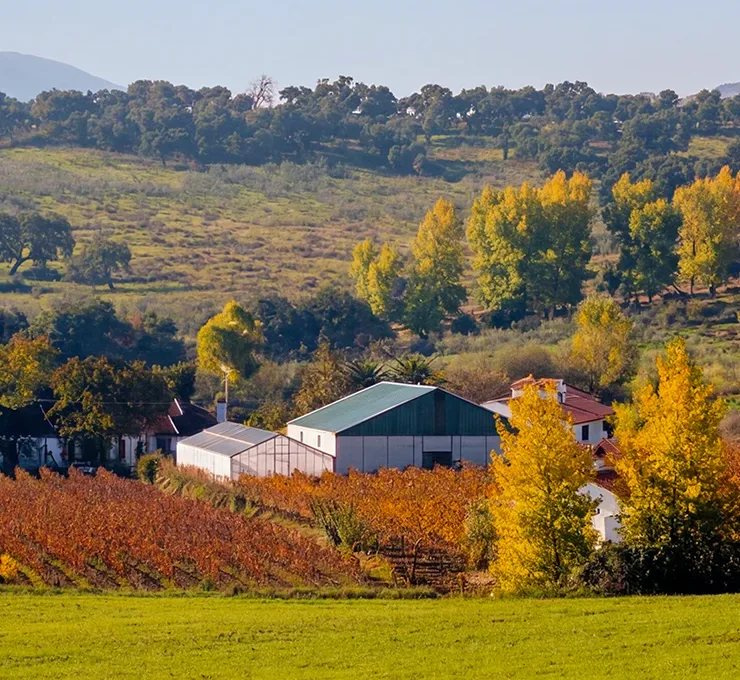
The German who restarted Ronda wine
Friedrich Schatz comes from Korb, in the Württemberg wine region of southern Germany. His family has been making wine since 1641. At 18, he decided to continue the tradition but somewhere warmer. He spent time in Italy and France before landing on Ronda, drawn by what he describes as the “Wagner line” — the climatic boundary between Mediterranean and Atlantic influences that runs through the Serranía.
He planted Finca Sanguijuela in 1982. He learned Spanish with the builders who restored the farmhouse and in Marbella. He chose the name Sanguijuela — the Spanish word for leech, referring to a local plant — and built everything from scratch: vineyard, winery, brand and philosophy.
The Ronda he arrived in had no wine culture to speak of. The ancient Roman city of Acinipo (today’s “Ronda la Vieja”), just a few kilometres from the finca, had been a significant wine-producing area. So had the whole Serranía before phylloxera. But by 1982, that was all history. Schatz made it the present again.
The vineyard: a small, unique ecosystem
Finca Sanguijuela spans three hectares at 700 metres altitude, with distinct Serranía soils and a cool climate shaped by strong day–night temperature shifts that preserve acidity.
Nine grape varieties grow here: one white (Chardonnay) and eight reds, including Tempranillo, Syrah and Cabernet Sauvignon. Two stand out: Lemberger (Blaufränkisch), used for the only single-varietal example in Spain, and Muskattrollinger, a rare German crossing brought directly by Friedrich Schatz—also unique in the country.
Essentials
- Phone: +34 952 871 313
- Email: bodega@f-schatz.com
- Website: f-schatz.com
Wine tasting
- Address: Ctra. Ronda la Vieja (MA-7402) km 0.5, 29400 Ronda
- Languages: ES, EN
- Min / max group: 2 to 15 people
The wines: six bottles, one surname
The six wines are designed so that their initials spell S-C-H-A-T-Z — the German word for “treasure”. All six come exclusively from Finca Sanguijuela, all under DO Sierras de Málaga.
S — Schatz Chardonnay
100% Chardonnay. Fermented and aged for five months sur lie in French Nevers oak. A white that drinks nothing like a Rioja Viura. Clean, precise, with a mineral thread. The Guía AkataVino named the 2018 vintage the best Chardonnay in southern Europe. Price: €20–30.
C — Schatz Pinot Noir
100% Pinot Noir. Around 2,500 bottles. Thirteen months in French Vosges and Allier oak. The southernmost serious Pinot Noir in Europe — an unlikely claim that the wine seems to justify. Verema users gave the 2017 vintage 8.8/10. Price: €25–29.
H — Schatz Acinipo
100% Lemberger/Blaufränkisch. Named after the Roman city nearby. 90/100 in the Guía Peñín (2011 vintage). Nine to twelve months in Slovenian and French oak. Dark fruit, structured tannins, nothing like anything else made in Spain. Price: €18–20.
A — Finca Sanguijuela
25% Tempranillo, 25% Merlot, 25% Syrah, 25% Cabernet Sauvignon. Twelve to thirteen months in French and American oak. The most “approachable” wine in the sense that the varieties are more familiar — though the no-sulphite, biodynamic approach means it still tastes like nothing from a supermarket shelf. Price: €23–27.
T — Schatz Petit Verdot
100% Petit Verdot. Eight to thirteen months in French Vosges and Allier oak. Petit Verdot elsewhere is a blending grape, almost always a supporting actor. Here it plays the lead — deep colour, concentrated black fruit, a structure that needs time. Price: €27–31.
Z — Schatz Rosado
100% Muskattrollinger. Five months sur lie in French Nevers oak. The only single-varietal Muskattrollinger rosé in Spain. Subtle floral character, good acidity, dry. Price: €15–20.
Organic, biodynamic, no sulphites — what does that actually mean here?
F. Schatz was the first certified organic winery in the province of Málaga, certified by the CAAE (Comité Andaluz de Agricultura Ecológica). That’s the verifiable baseline. Beyond that, the winery applies biodynamic practices — specifically Rudolf Steiner’s preparations 500 to 508, which include horn manure, horn silica and a range of plant-based preparations from yarrow to valerian. Each one appears as an illustration on the wine labels.
A few things to clarify, because this gets muddled online:
- Organic certification (CAAE): confirmed and documented.
- Biodynamic practices: applied consistently since the beginning.
- Demeter certification: not confirmed. The winery applies biodynamic methods but, according to specialist platforms, the wines do not carry Demeter certification.
- No added sulphites: all six wines are bottled without sulphites added. This is genuinely unusual at this quality level and particularly at this longevity — the wines age well despite it.
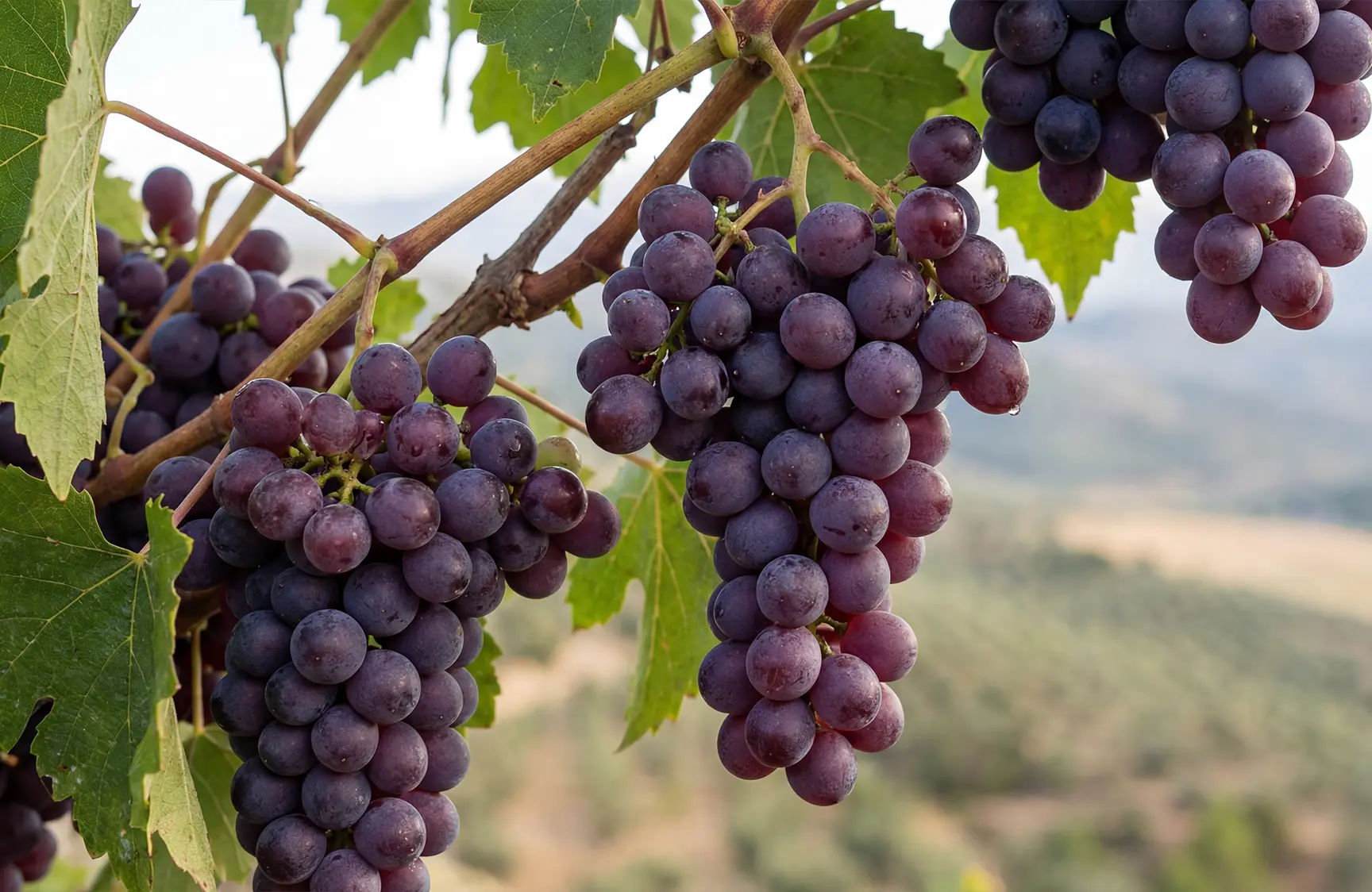
In the vineyard: green manure with legumes sown in autumn and incorporated in spring, composting of vine cuttings and grape pomace, double Guyot training on wire, very low yields — around 1 kg per vine, between 3,500 and 5,000 kg per hectare — and hand harvesting in 15-kg crates.
In the winery: indigenous yeasts, open-top fermentation vessels, manual punch-downs, sur lie ageing with bâtonnage in French, American and Slovenian oak barrels.
It is, by any measure, an extremely labour-intensive operation for 15,000 bottles a year.
Visiting F. Schatz: what to expect
The winery does not operate walk-in visits. Everything is by prior appointment — email or phone, in Spanish or English. Groups run from 2 to 15 people.
The standard experience, bookable through platforms like Winedering or directly with the bodega, lasts around 90 minutes and includes a guided tour of the vineyard and cellar, a tasting of four wines from the Schatz range, and a cold aperitivo. Price: from €44 per person.
There is also a Club Schatz — a private membership that includes free visits and workshops, preferential access to limited-edition bottles and early releases, and direct communication with Federico Schatz himself.
Visitors consistently praise the personal character of the experience. Federico Schatz is often present, and the setting — a working biodynamic finca with views towards the Sierra de Grazalema — does most of the talking before the wine even arrives.
TripAdvisor reviewers highlight in particular the intimacy of the visit, the depth of Schatz’s explanations, and the contrast between the small scale of the operation and the quality in the glass.
FAQ
How do I book a visit to Bodega F. Schatz?
Contact the winery directly by email at bodega@f-schatz.com or by phone on +34 952 871 313 / +34 678 664 105. Visits require prior booking and run for groups of 2 to 15 people. You can also book through Winedering.com, which lists the standard 90-minute tour with tasting from €44 per person.
Is Bodega F. Schatz certified biodynamic?
The winery applies biodynamic practices consistently — Rudolf Steiner’s preparations 500 to 508, low yields, indigenous yeasts, no added sulphites — and is certified organic by the CAAE, the first winery in Málaga province to receive that certification. A Demeter biodynamic certification has not been confirmed from public sources; the certified status is organic.
Can I buy F. Schatz wines in the UK?
There is no formal UK distributor at present. The most direct route is to order from the winery’s own online shop at f-schatz.com, which ships internationally. F. Schatz also appears at the RAW WINE fair in London, which is a good opportunity to taste the wines before buying. In the EU, Lekker Sapje in the Netherlands stocks the Acinipo Lemberger.
What do F. Schatz wines cost?
The range runs from around €15–20 for the Rosado (Muskattrollinger) and €18–20 for the Acinipo, up to €27–31 for the Petit Verdot. The Chardonnay is €20–30 and the Pinot Noir €25–29. The Schatz Collection pack of all six wines retails at €160. Prices are lower through the winery’s direct shop than through retailers, and Bodeboca occasionally runs private sales with discounts of up to 30%.
How does F. Schatz compare to other Ronda wineries?
F. Schatz is the oldest operating winery in the modern Ronda appellation — it predates the DO Sierras de Málaga (created 2001) by nearly twenty years. It is the only producer in Spain making monovarietal wines from Lemberger/Blaufränkisch and Muskattrollinger, and all six wines are bottled without added sulphites, which is uncommon at this quality level. For enoturismo options with a more developed infrastructure — restaurant, events spaces — Descalzos Viejos or Cortijo Los Aguilares are worth looking at alongside a Schatz visit.
What makes Ronda wines different from the rest of Spain?
Ronda sits at between 600 and 900 metres altitude — much higher than most Spanish wine regions — with a continental climate tempered by Atlantic airflows from the west. That combination of heat, altitude and strong day-to-night temperature variation produces wines with good natural acidity and structure that are quite different from the warmer, riper profile typical of coastal Andalusia. The DO Sierras de Málaga was created in 2001 specifically to reflect this distinct terroir.