Málaga Wine
A wine that used to be served at the court of Catherine the Great. A wine that Shakespeare wrote about. A wine that showed up at Christie’s very first auction in 1769 — placed alongside the finest Burgundy and Riesling — and won.
What is Málaga wine, exactly?
Most people expect one thing and find two completely different worlds. Getting this distinction right will save you from ordering something completely different from what you expected.
DO Málaga
Sweet and fortified wines made from Pedro Ximénez and Moscatel grapes that have been sun-dried on esparto grass mats. Dark, concentrated, complex: caramel, dried figs, roasted coffee, chocolate, Christmas pudding. This is the Málaga that Catherine the Great fell in love with.
DO Sierras de Málaga
Created in 2001, specifically because winemakers around Ronda were producing excellent dry wines. The same province, the same soil in some cases, but an entirely different glass. This is the Málaga wine that competes with Rioja and Priorat.
Five zones, five personalities
The province of Málaga splits into five wine subzones. They share a denomination but are genuinely different worlds — in geology, climate and in the glass.
Axarquía
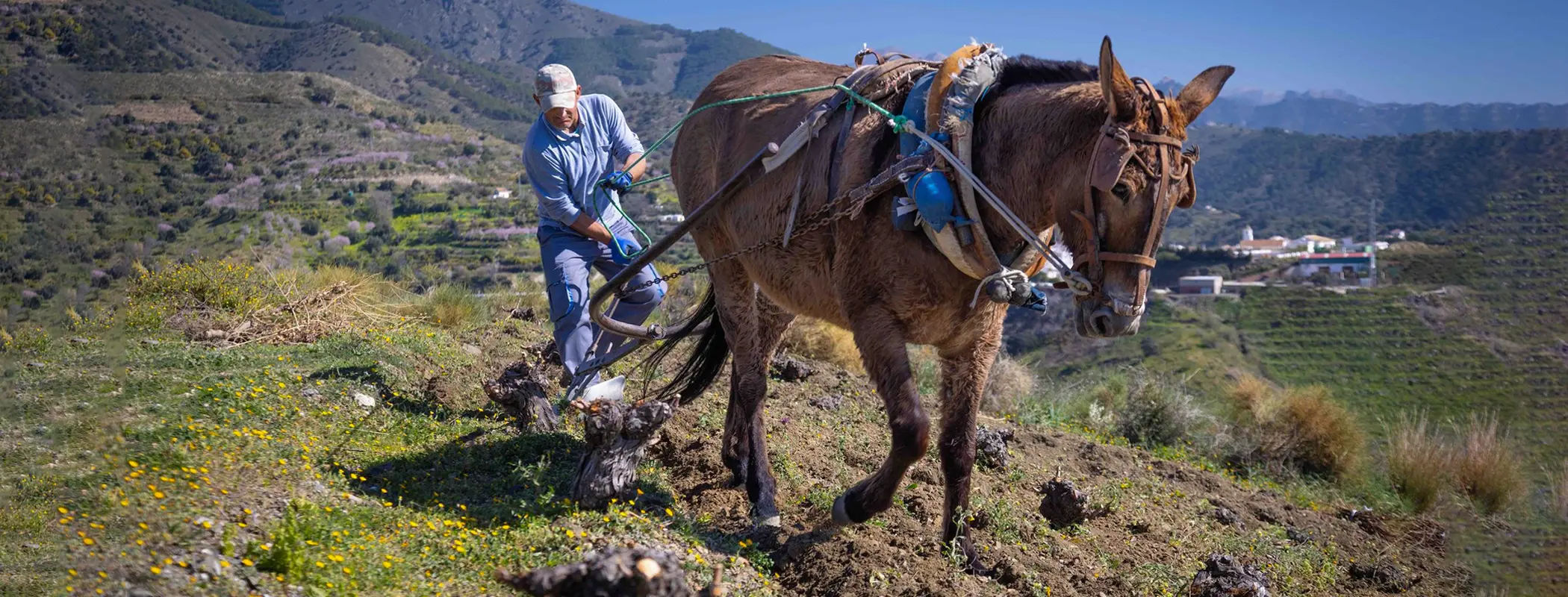
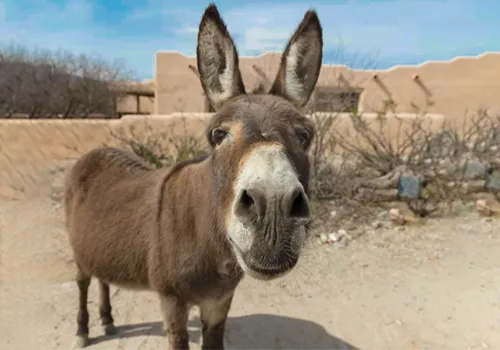
The Phoenicians brought Moscatel de Alejandría here more than 2,000 years ago and it never left. The vines cling to slate and schist slopes at 40–70% gradient — too steep for any machinery. Everything is done by hand, with mule transport on the steepest terraces. In 2018, FAO and UNESCO recognised these landscapes as a Globally Important Agricultural Heritage System — one of fewer than 50 worldwide.
Montes de Málaga
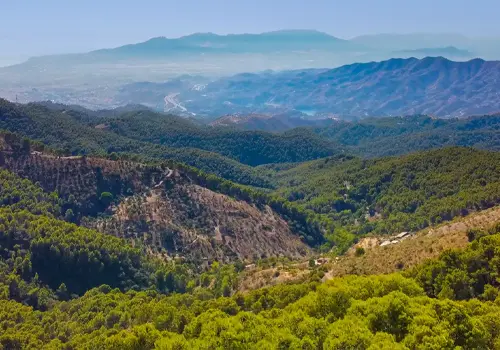
Before phylloxera, 900 lagares (winery-farmhouses) operated on these hilltops producing the legendary dry Pedro Ximénez “Mountain Wine” — once better known in England than Sherry. Today, fewer than 12 small family plots remain.
Victoria Ordóñez used an 18th-century book to locate the old vineyard sites and has been painstakingly rebuilding what was lost. Her Voladeros — a dry, barrel-fermented PX — is a direct tribute to the Mountain Wine tradition that nearly vanished entirely.
Antequera
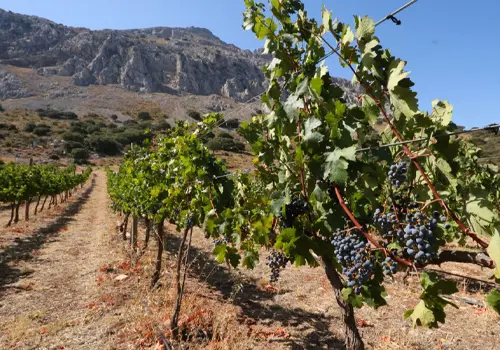
This is where roughly 80% of DO Málaga production actually comes from. Extreme continental climate, high-sugar PX, and consistent wines from the established houses. Bodegas López Hermanos, whose Cartojal is the accessible entry point to DO Málaga, is based here. Less romance than the mountain zones. More tradition.
Manilva
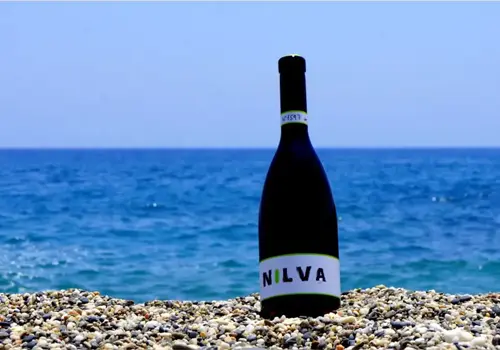
The far western tip of the province, almost into Cádiz. Views of Africa on clear days. The Atlantic influence keeps temperatures gentler and the local Moscatel is fresh and aromatic in a subtly different way from the inland styles. Small-scale and largely local — Nilva Enoturismo won Best White Wine of DO Sierras de Málaga 2025 and is doing interesting things with recovery viticulture.
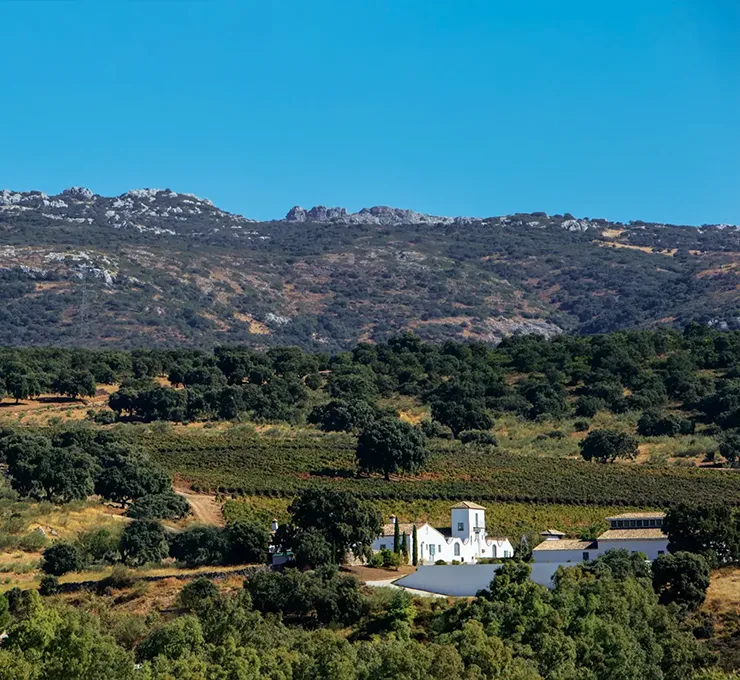
Serranía de Ronda
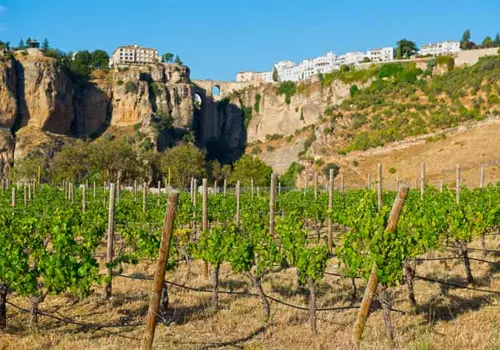
Vineyards at 700 to 900+ metres above sea level. Mediterranean to the south, Atlantic to the west. That thermal gap is what gives Ronda wines their extraordinary aromatics and the natural acidity that lets them age with elegance.
We’ve written a full deep-dive into Ronda as a wine region.
Arrope, the ingredient that exists nowhere else
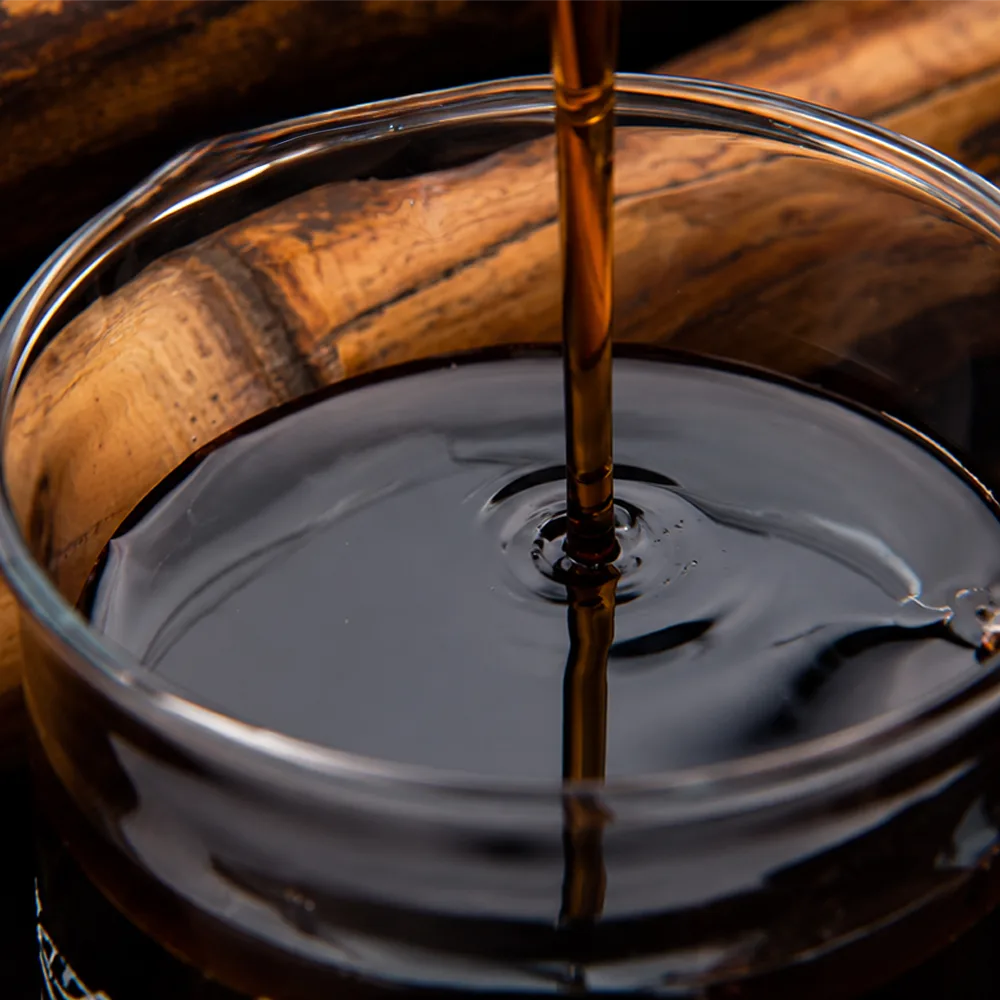
Arrope (from the Arabic arrúbb, and before that, the Roman defrutum) is grape must — unfermented grape juice — cooked slowly over low heat in large copper cauldrons until it reduces to roughly one-third of its original volume. The result is a thick and dark syrup. Imagine a very long, patient reduction of grape juice.
When a drop of finished arrope falls onto a cold plate and holds its shape without spreading, it’s done. The Romans used it to sweeten everything from porridge to wine. In old Axarquía households, it was spread on bread, stirred into orange juice as a cold remedy, made into sweets for children.
In the wine, arrope does three things: it deepens the colour, adds layers of dried-fruit and caramel complexity, and helps the wine age for an extraordinary length of time. The proportion of arrope officially defines the colour classification of DO Málaga.
The system moves from pale Dorado wines with no arrope, through darker Rojo Dorado and Oscuro, to almost black Negro wines made with the highest proportion of arrope.
The grapes of Málaga
These are the grapes redefining Málaga today: ancient Mediterranean varieties alongside ambitious reds thriving at altitude. Together, they explain why the province has become one of Spain’s most intriguing wine regions.
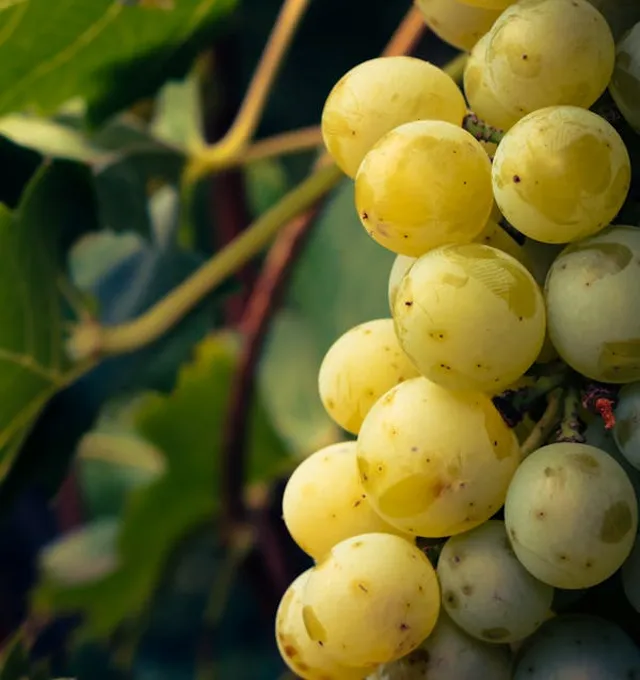
Pedro Ximénez (PX) is the historic backbone of the region. DNA studies have confirmed it’s a Mediterranean variety originating in Andalusia. It was described in 1792 as “one of the mellowest, most fragrant, spirited and special grapes in Spain.”
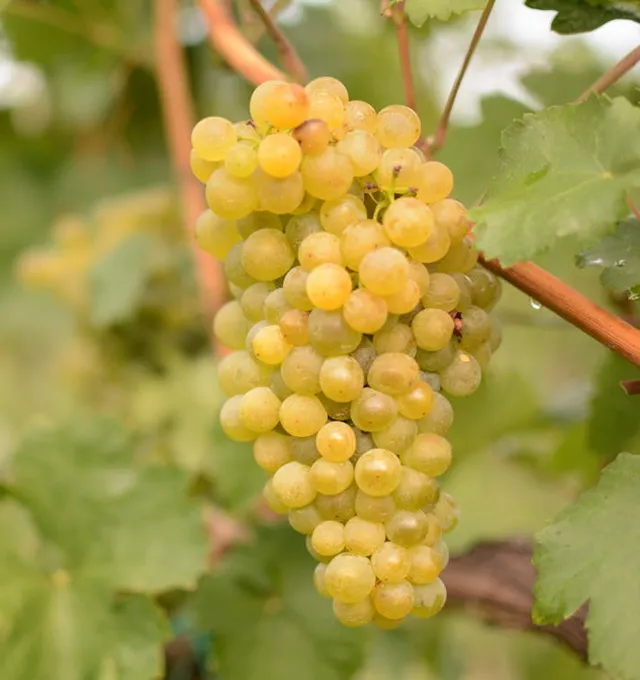
Moscatel de Alejandría is Axarquía’s queen — introduced by the Phoenicians. Intensely aromatic: white flowers, lychee, citrus, tropical fruit. In its dry form, Jorge Ordóñez’s Botani was Spain’s first modern dry Moscatel — a profile unlike any other Spanish variety.
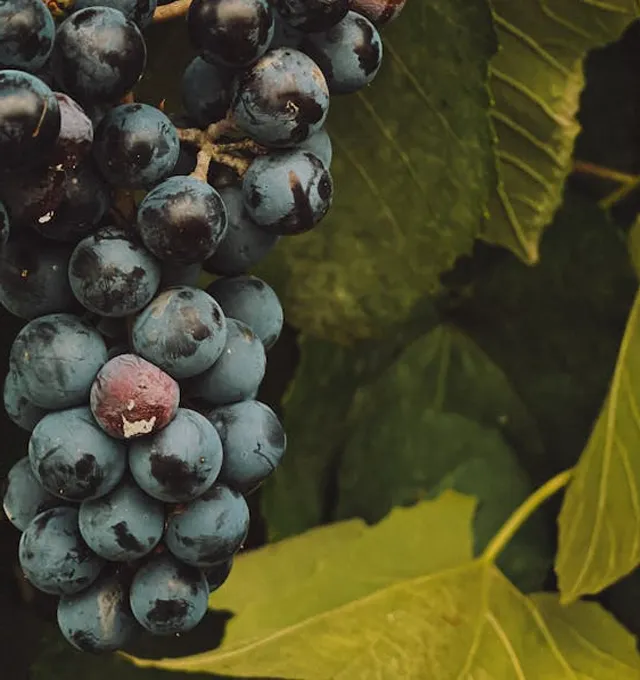
The Ronda reds — Petit Verdot, Cabernet Sauvignon, Syrah, Graciano, and increasingly rare indigenous varieties like Romé, Blasco, and Tintilla — are what’s turning heads internationally. Petit Verdot in particular seems to have found its Spanish home here: altitude and limestone produce structured and complex wines.
Bodegas Sedella
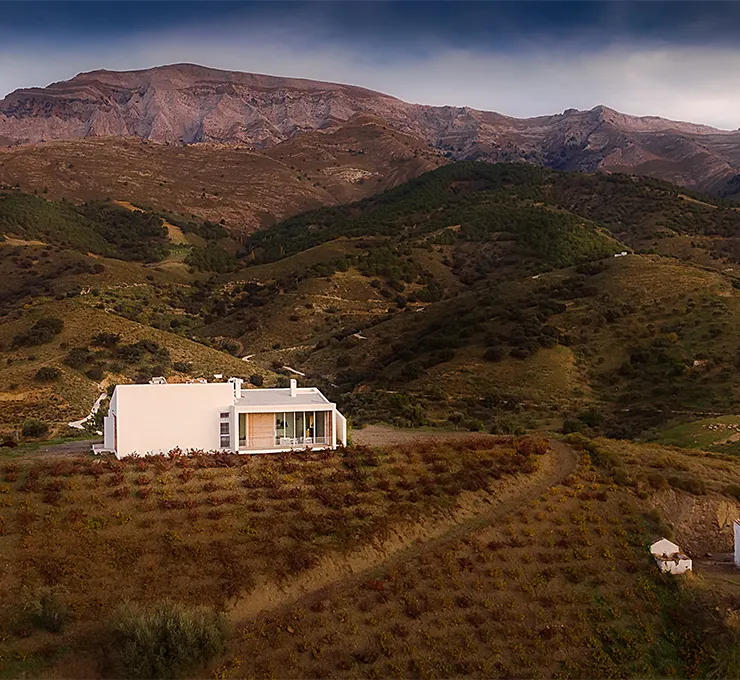
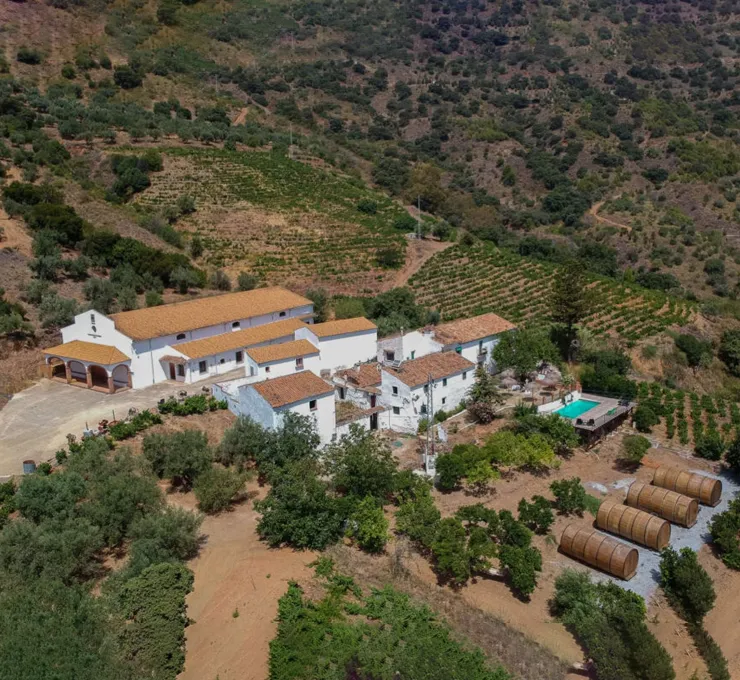
Sedella is the personal project of Lauren Rosillo — an enologist who works across Spain, from Rioja to Rueda to Guipúzcoa — but chose Axarquía for something different.
The estate sits in the village of Sedella itself, on the steep slate and schist slopes that give Axarquía its identity. Organic agriculture, indigenous varieties, and yields that make commercial winemaking look wasteful. The aim is to express a specific place — not a style, not a brand — through the bottle. In landscapes recognised by FAO and UNESCO as globally irreplaceable, Sedella is doing exactly that.
Antigua Casa de Guardia
The oldest wine bar in Málaga, still serving wine straight from barrel into glasses marked with chalk. An essential visit if you’re in the city. Up to a dozen different DO Málaga styles by the glass, inexpensively, standing at the bar. There is nothing else quite like it in the wine world.
Cortijo Los Aguilares
One of the reference bodegas for dry Sierras de Málaga. Their Tadeo Tinaja — Petit Verdot aged in amphora — is one of the most distinctive bottles in the province: structure and terroir with restraint. A good entry point into understanding what Ronda’s high-altitude viticulture can produce.
DO Málaga ageing classification
The ageing nomenclature runs alongside the colour system above. Here’s what actually matters when you’re reading a label:
| Style | Ageing | What to expect |
|---|---|---|
| Pálido | Up to 6 months | Fresh, pale, aperitif style. Lighter body. |
| Málaga | 6–24 months | Golden; beginning to develop nutty, oak notes |
| Noble | 2–3 years | Mahogany. Dried fruit, caramel, toasted nuts. |
| Añejo | 3–5 years | Rich and unctuous. Fig, coffee, chocolate. |
| Trasañejo | 5+ years | Almost syrupy, with beautiful balancing acidity |
For DO Sierras de Málaga dry wines, the classification is simpler: Crianza, Reserva, Gran Reserva — same as the rest of Spain.
What to drink it with
The range of pairings is wider than most people expect — and it runs from aperitif to dessert.
Trasañejo (the oldest, most complex sweet style): Cabrales or Roquefort blue cheese, dark chocolate above 70% cocoa, foie gras, dry-cured aged Manchego. The wine has enough intensity to stand up to all of them.
Young Moscatel (slightly sweet or dry): Cold aperitif with local olives, boquerones al limón, or fried anchovies. Fresh, aromatic, and undemanding. Summer drinking.
Dry whites from Sierras de Málaga: Espetos de sardinas, fried pescaíto malagueño, grilled sea bass, clams with white wine. The natural acidity of mountain whites handles them all.
Ronda reds: Chivo lechal malagueño (suckling goat), slow-cooked mountain game, rich stews with garbanzo beans. The structure and altitude in these wines needs food with presence.
A brief history — and why it nearly disappeared
Málaga’s vineyards once covered over 112,000 hectares. In 1878 — the first phylloxera detection in Spain — the insect arrived. Within a generation, 80% of those vines were gone. Pedro Ximénez was almost entirely wiped out. Post-phylloxera farmers replanted with Moscatel (which had three commercial uses: wine, raisins, table grapes) rather than PX, and the signature Mountain Wine tradition was erased from institutional memory.
What followed compounded the damage: the Civil War destroyed infrastructure and displaced rural populations. Franco-era cooperatives prioritised volume over quality. Then the 1960s tourism boom converted what remained of the vineyard land along the Costa del Sol into hotels.
By the time the modern renaissance began, approximately 3,800 hectares remained of those original 112,000 — a 97% loss. The wine that once accounted for 50% of Spain’s total exports had become a footnote.
The recovery was slow, human, and in many cases financially painful. Friedrich Schatz arrived in Ronda in 1982. Telmo Rodríguez began the Molino Real project in the mid-1990s, later admitting: “We never did great business, we lost money, but it is one of the wines we are most proud of.” Jorge Ordóñez returned in 2003. Victoria Ordóñez began her Montes revival in 2015.
Today there are 45 wineries — up from 9 in 2001. The 2025 vintage is estimated at just 2 million kilograms, 30% below 2024, following two consecutive years of drought and heat stress. These wines are made on slopes of 40–70%, all by hand, at yields of 900–2,000 kg/ha versus 20,000 elsewhere. The economics remain brutal.
The wines are worth it.
FAQ
What is Málaga wine?
Málaga wine refers to wines produced across two denominations in Spain’s Málaga province. DO Málaga covers sweet and fortified wines — made primarily from sun-dried Pedro Ximénez and Moscatel de Alejandría grapes, aged in American oak, often with arrope added for colour and sweetness. DO Sierras de Málaga covers dry still wines — whites, rosés, and reds — particularly from the high-altitude Serranía de Ronda subzone. Both are managed by the same Consejo Regulador, Spain’s oldest wine regulatory council.
Is Málaga wine sweet?
Traditionally yes — DO Málaga is known for its sweet, aged wines, ranging from lighter aperitif styles (Pálido) to deeply concentrated Trasañejos that rival vintage Port or aged Tokaji in complexity. But DO Sierras de Málaga produces entirely dry wines: structured mountain reds, elegant whites, and sparkling wines made by the Champagne method. If you’ve only encountered the sweet style, the dry side of the province will come as a genuine surprise.
What is Málaga fortified wine?
Málaga fortified wine (DO Málaga) is produced by adding grape spirit to stop fermentation before all the sugars convert, leaving residual sweetness and raising alcohol to 15–22% ABV. Grapes are typically sun-dried first to concentrate sugars. The wines are then aged in American oak, often using a fractional blending system, with arrope added to deepen colour and add complexity. Historically, the original Málaga wine was unfortified — 18th-century Mountain Wine was a natural 14% ABV dry Pedro Ximénez. Fortification only began in the mid-1700s to help the wine survive long sea voyages.
How is Málaga wine different from Sherry?
Both come from Andalusia and were once hugely popular across Britain and Northern Europe, but they’re very different wines. Sherry (from Jerez) is based on Palomino grapes, uses flor yeast for biological ageing, and has a drier, more oxidative profile. DO Málaga is based on Pedro Ximénez and Moscatel, uses arrope for colour and sweetness, and tastes distinctly of raisins, dried fruit, and caramel. In the 18th century, Málaga wines were actually better known internationally than Sherry. Phylloxera — and the specific challenges of mountain viticulture — changed that.
What are the best Málaga wines to try as a beginner?
Start with Botani from Jorge Ordóñez — Spain’s first modern dry Moscatel, widely available in the UK, and a good introduction to what Axarquía’s Moscatel de Alejandría can do in a dry style. Then try Cartojal from López Hermanos for the classic sweet DO Málaga experience: affordable, accessible, and the benchmark entry point. If you’re in Málaga city, the Antigua Casa de Guardia lets you try a range of styles directly from barrel.
Where can I buy Málaga wine in the UK?
Botani (Jorge Ordóñez) is the most widely distributed Málaga wine in the UK, available through major wine merchants and online retailers including Decantalo UK. Wines from Cortijo Los Aguilares and Doña Felisa appear through specialist importers. For the classic sweet DO Málaga style, Decantalo has the broadest range.
Sources: Consejo Regulador DO Málaga / DO Sierras de Málaga (vinomalaga.com); Guía Peñín; Wine-Searcher; Spanish Ministry of Agriculture (MAPA); Junta de Andalucía; Ruta del Vino de Ronda y Málaga (rutavinorondamalaga.com); Grandes Pagos de España; FAO/UNESCO GIAHS documentation (2018); Christie’s auction archives; Hugh Johnson, Vintage: The Story of Wine.