Sweet Wines of Málaga
Málaga sweet wine — or Málaga dulce, as you’ll see it written on bar menus and bottle labels across the province — is one of the oldest wine styles in Europe and one of the least understood outside Spain. At its lightest, it’s a pale, floral, almost fizz-like aperitif wine. At its darkest, it’s a near-black dessert pour that moves like syrup. Same region, completely opposite wines.
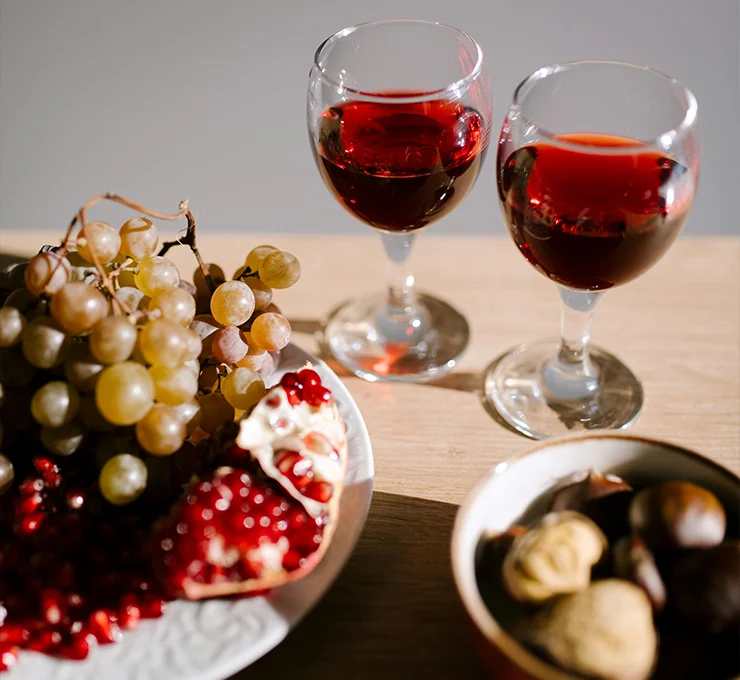
The two styles you need to know
Málaga’s sweet wines fall into two completely opposite camps. Think of it as choosing between a spring morning and a winter evening by the fire.
| Moscatel | Pedro Ximénez | |
|---|---|---|
| Colour | Pale straw, almost green tints | Deep mahogany, nearly black |
| Aromas | Flowers, citrus, fresh grape, honey | Raisins, dried figs, chocolate, coffee |
| Sweetness feel | Fresh, like biting into a ripe grape | Dense, like liquid Christmas cake |
| Body | Light, fluid | Full, syrupy, viscous |
| Best served | Very cold, 6–8°C | 10–14°C depending on age |
| Best moment | Aperitif, summer, celebrations | After dinner, cheese, quiet contemplation |
Moscatel seduces through perfume. Pedro Ximénez seduces through depth. Both are extraordinary. And both fall under DO Málaga, one of Spain’s oldest denominations of origin — established in 1933.
Cartojal, the wine of the Feria
If you’ve spent any time in Málaga city and wondered what everyone around you was drinking — it was probably this.
Every August, Málaga’s ten-day street party gets through around 240,000 bottles of this pale, floral wine — roughly half the year’s entire production. The wine is Cartojal, and the fuchsia pink plastic cups it comes in have become as much a symbol of the Feria as the flamenco dresses.
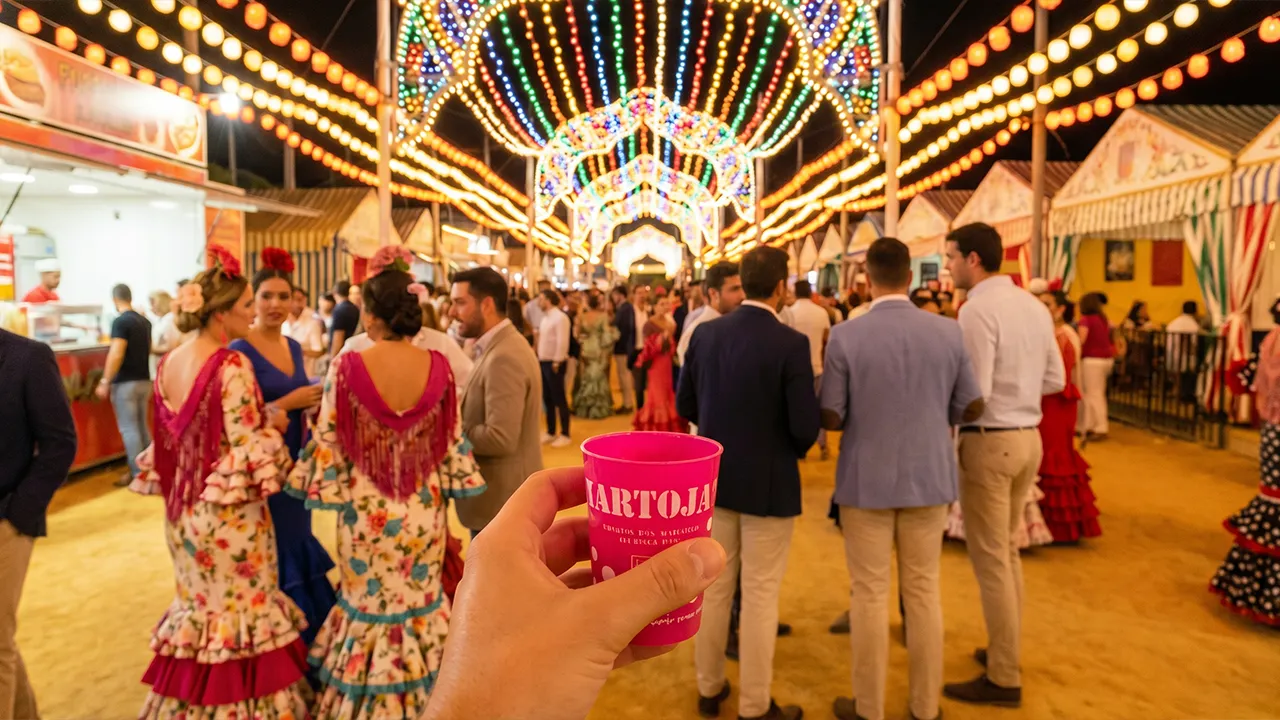
The origin story is good: in the late 1980s, Bodegas López Hermanos (now Bodegas Málaga Virgen) created it on commission for a British company, exported it to the UK under a different name, and paid it little attention. Then, around 1992, someone at the bodega noticed that enormous quantities of wine were being consumed at the Feria — none of it local. They started introducing Cartojal at tasting events on parade floats. The rest is history.
In the glass: pale straw, intensely aromatic — white flowers, citrus, fresh grape, honey, a faint smokiness. Sweet but not cloying, light-bodied, dangerously easy to drink at 15% ABV. Serve it at 6–8°C. As cold as it will go.
For the full Málaga wine experience beyond the Feria, Antigua Casa de Guardia — the city’s oldest taberna, open since 1840 — is where you go next. It’s a different proposition entirely: barrel-poured PX and Moscatel, your order chalked on the bar in pencil, zero concession to tourism. Different from Cartojal, but the same essential Málaga spirit.
Pedro Ximénez from Málaga
Pedro Ximénez is Málaga’s great dessert wine — and arguably its most misunderstood outside the region.
Most people associate Pedro Ximénez with Jerez or Montilla-Moriles. Fair enough — but Málaga got there first. In 1618, the writer Vicente Espinel was already describing “the famous wine of Pedro Ximénez de Málaga.” The grape has been grown in these hills for centuries.
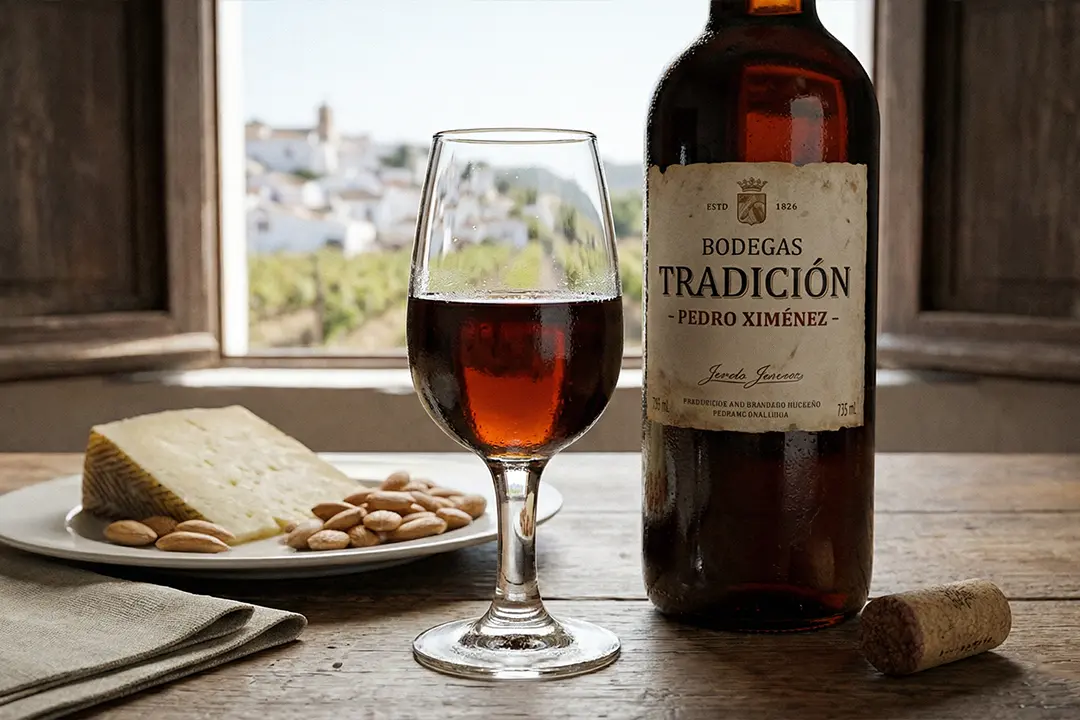
What makes Málaga PX different? Two things. First, arrope — a thick, intensely sweet reduced grape must that no other Spanish DO uses. It adds colour and a depth of flavour that’s impossible to replicate. Second, the blending tradition: a good Málaga PX is often assembled from multiple base wines — young tiernos, naturally sweet wines, aged olorosos — creating layers you won’t find in single-style PX from elsewhere.
The producers to know: Bodegas Málaga Virgen, Bodegas Quitapenas (est. 1880), and Antigua Casa de Guardia — Málaga’s oldest taberna, where wine is still poured straight from the barrel and the bill is chalked on the bar in pencil.
In the glass: dark mahogany, almost black. Raisins, dried figs, coffee, dark chocolate, caramel. Dense, velvety, slow. Serve at 10–14°C.
Moscatel, the natural sweet wine of the mountains
Beyond Cartojal, Moscatel has a quieter, more serious side — and much of it comes from the mountains around Ronda.
Bodegas like La Melonera and Cortijo Los Aguilares are producing Moscatel that deserves a conversation beyond the Feria cups. These are wines to drink with food — fresh goat’s cheese, pestiños, fruit-based desserts — or simply very cold as an aperitif, on a terrace, with no particular agenda.
How to drink them
A few concrete pointers so you can do right by both wines:
Cartojal / Moscatel dulce: Serve very cold (6–8°C) as an aperitif or alongside fresh goat’s cheese, pestiños (honey-glazed fried pastries), or blue cheese. Local pairing note: borrachuelos are literally made with Moscatel syrup, so the match is basically written in. Not recommended with fried fish — that calls for a dry white.
Pedro Ximénez: The famous trick is to pour a good splash of PX over a scoop of good vanilla ice cream. It works. It always works. Beyond that: Cabrales or Roquefort, dark chocolate (70%+), tocino de cielo, or — if you want to go full Málaga — a slice of bienmesabe, the almond-honey conventual dessert from Antequera that dates to 1635. Some recipes soak the sponge in PX, which is honestly just showing off at that point.
Want to go deeper on the region? Our full guide to Málaga wines covers the denominations, the sub-zones, and every producer worth seeking out.
What is Málaga sweet wine made from?
Málaga sweet wine — known locally as Málaga dulce — is a naturally sweet or fortified wine produced under the DO Málaga denomination in southern Spain. It’s made primarily from two grape varieties: Moscatel de Alejandría (lighter, floral) and Pedro Ximénez (darker, richer). The style ranges from pale, fresh aperitif wines like Cartojal to near-black dessert pours with dried fruit, coffee, and chocolate character.
What grape is Málaga sweet wine made from?
Mostly two grapes: Moscatel de Alejandría and Pedro Ximénez. Moscatel produces lighter, floral, fresh-fruit styles (Cartojal being the most famous); PX produces darker, heavier wines with dried fruit, coffee, and chocolate character. A few smaller varieties — Doradilla, Romé — occasionally appear in traditional blends.
Is Málaga wine fortified?
Some of it is, some isn’t. Cartojal, for example, has fermentation stopped with rectified wine alcohol (which brings it to 15% ABV), so technically yes — it’s a fortified sweet wine. But there are also naturalmente dulce (naturally sweet) wines made without any spirit addition, where fermentation naturally stops due to high sugar concentration. The mountain Moscatels from producers like La Melonera are a good example.
What does Cartojal taste like?
Pale, quite light in body, with aromas of white flowers, citrus, fresh grape, honey, and a faint smokiness. Sweet on the palate but not cloying — it has good acidity to balance. Best served very cold (6–8°C). Think of it as the wine equivalent of a really well-made lemonade at a summer party — deceptively easy to drink.
What's the difference between Málaga PX and Jerez PX?
Málaga PX predates Jerez PX historically — references go back to 1618. The key technical differences: Málaga allows the addition of arrope (cooked must), which no other DO uses; Málaga PX wines are often complex blends of multiple base wines; and both fortified and unfortified PX expressions exist here. The result tends to be more layered and complex than single-style PX from Jerez. The key producers — Málaga Virgen, Quitapenas, Antigua Casa de Guardia — are all distinct from the Sherry houses.
Where can I try Málaga sweet wine?
In Málaga city, Antigua Casa de Guardia (open since 1840) is the most direct route — wine poured from the barrel, bill chalked on the counter. During the Feria de Agosto, Cartojal is inescapable. For the mountain Moscatel and dry wines of the Ronda area, bodega visits to La Melonera or Cortijo Los Aguilares are worth planning around.
Sources: Bodegas Málaga Virgen (bodega interviews and technical sheets); Sabores de Carmen; Spain-Holiday.com; Blog Delpaso; MalagaWeb; Guía Peñín; DO Málaga official regulations; SherryNotes; Winetraveler.