A local guide of the best wineries in Ronda

There are over twenty wineries in the Serranía de Ronda — one of Spain’s most distinctive wine regions. Some predate the appellation, others are reviving long-extinct grape varieties, and a few stand out for unique settings like a 16th-century convent or beside Roman ruins.

A photo of the Winery Cortijo Los Aguilares in Ronda

Cortijo Los Aguilares

Jancis Robinson named one of their wines her Wine of the Week. They’ve taken multiple golds at the Mondial des Pinots in Sierre — arguably the world’s most demanding Pinot Noir competition. They’re one of only a handful of Spanish estates admitted to Grandes Pagos de España. This is not a boutique winery trading on scenery.

800 hectares at 900 metres above sea level. Holm oaks, cereal fields, Ibérico pigs — and 25 hectares of organic, hand-harvested vines in the middle of it all. The winery is gravity-fed. The Pinot Noir is possibly the most southerly serious example in Europe.

If you want to understand what Ronda’s altitude and limestone actually does in the glass this is the best classroom available. Their entry-level Pago El Espino regularly scores 93–94 in Peñín at around €20 a bottle. A useful reference point before you visit.

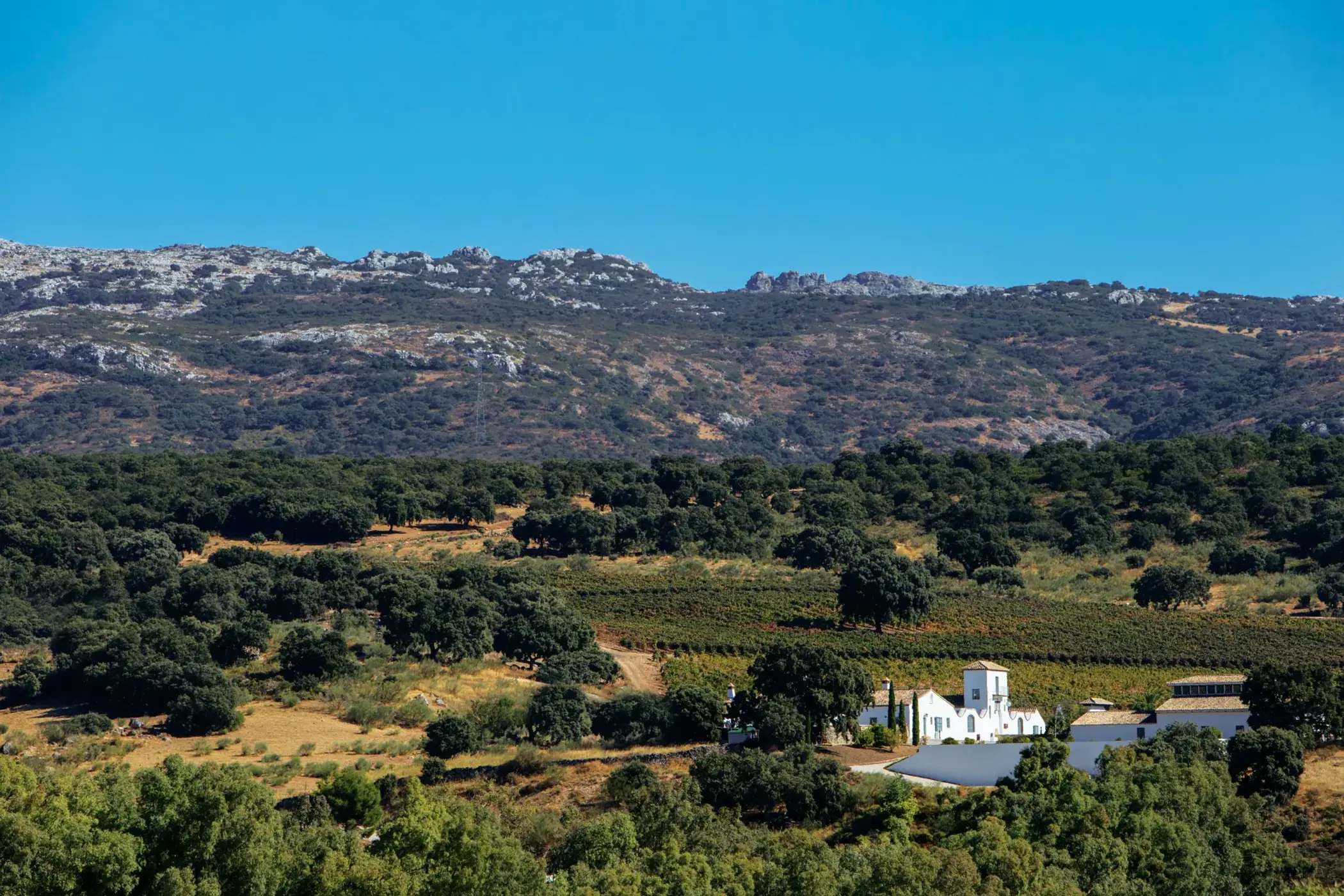
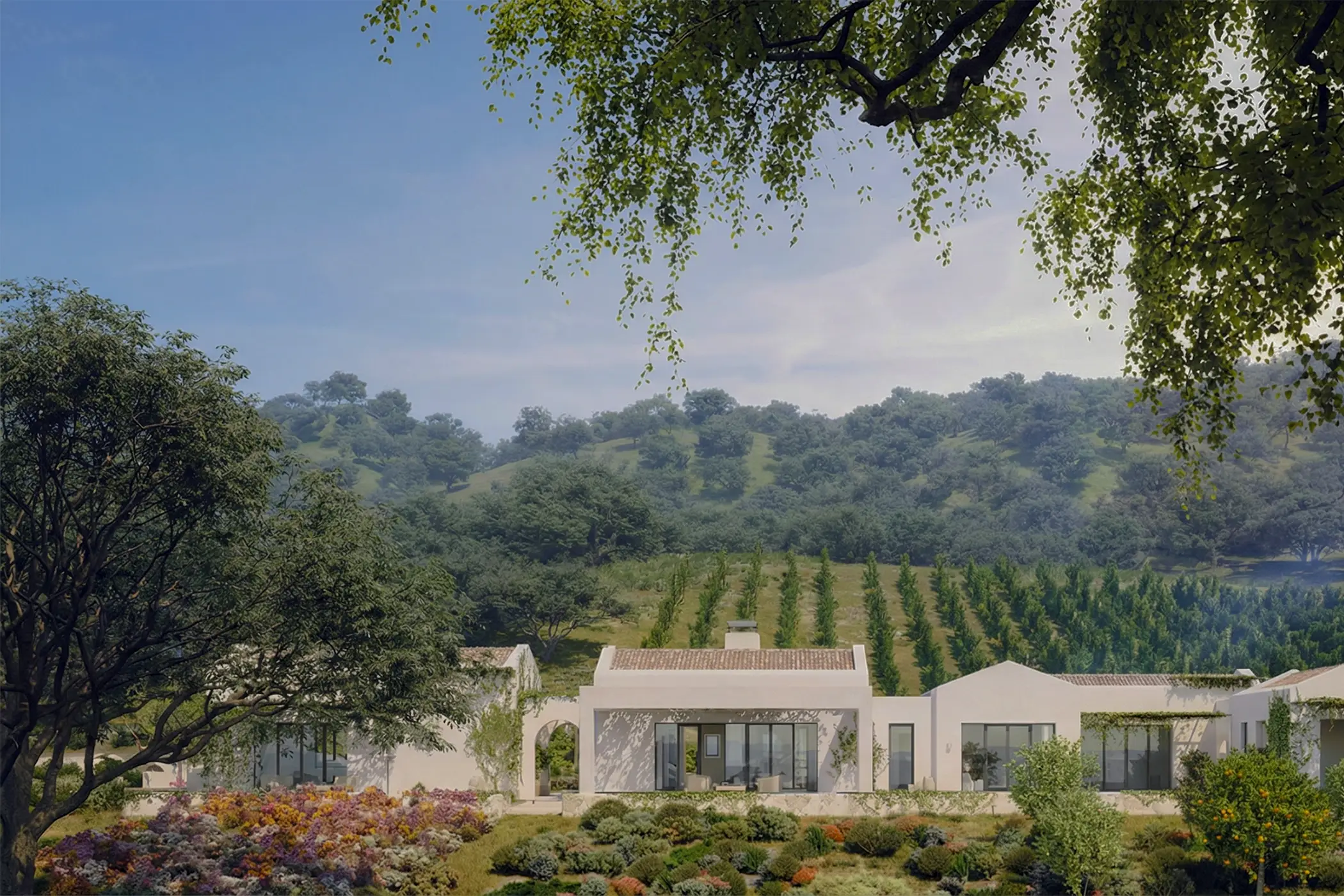
Bodega La Melonera

Before phylloxera arrived in Málaga in 1878, the Serranía de Ronda had nearly 13,500 hectares of vines and dozens of indigenous grape varieties. Most of those varieties simply ceased to exist. La Melonera has made bringing them back its central project.

Working from an 1807 ampelographic survey of Andalusian varieties and in collaboration with the Rancho de la Merced research centre in Jerez, they’re cultivating Tintilla de Rota, Blasco, Romé, Melonera, Perruna — grapes that haven’t been in commercial production for over a century. The Melonera grape has melon-striped skin. It names the estate. It nearly disappeared forever.

Their Payoya Negra won gold at the Challenge International du Vin. It tastes like nothing else produced in Spain, because nothing else like it exists in Spain. In 2008, the bodega hosted a symposium attended by Jancis Robinson, Michel Rolland, and Peter Sisseck. That visit put Ronda on the international wine map.
bodega la melonera ronda spain
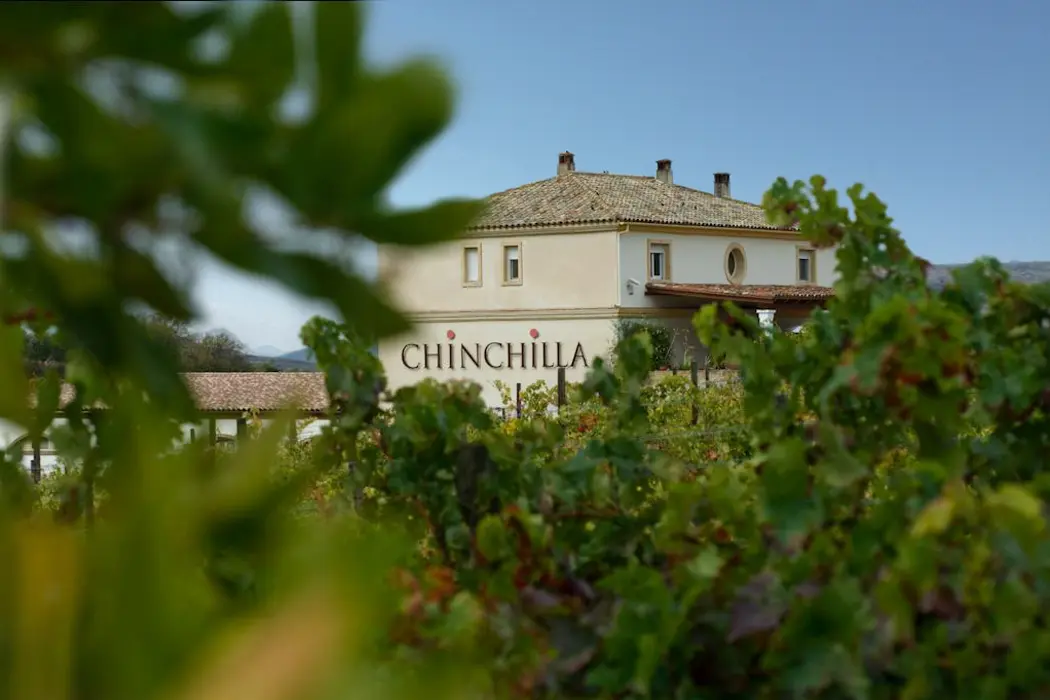
Winery Doña Felisa Chinchilla in Ronda

Bodega Doña Felisa

Their Chinchilla Doble Doce Reserva — 85% Cabernet Sauvignon — won Best Cabernet Sauvignon in the World at the International Cabernet Competition in Paris. In 2014. Then again in 2016. Not 2014 or 2016. Both.

Founded in 1999 by José María Losantos and his wife Gema, the estate sits just below the Acinipo ruins. José María has quietly assembled a collection of Roman artefacts found on the property over the years — coins with grape imagery, pottery fragments, arrowheads. The land has been producing wine for a long time.

The range spans ten wines: young reds, crianzas, a Champagne-method sparkling, and a sweet 100% Moscatel de Alejandría in a 2,000-bottle run. Daily tours at 11:30 mean you don’t need to coordinate around a fixed private slot. Overnight rooms are available if you want to turn it into a longer stay. Of all the bodegas in Ronda, this is the most straightforward to visit — and one of the hardest to leave disappointed.

Other wineries and vineyards worth knowing

Bodega F. Schatz

The pioneer. In 1982, a German teenager arrived with no appellation, no winemaking tradition, and a plan. He became the first certified organic winemaker in Andalusia. He still farms the same 3 hectares. One of his wines is called Acinipo.

Descalzos Viejos

A 16th-century convent on the edge of the Tajo gorge, restored by two architects who found frescoes hidden under the lime. The barrel room is the old chapel. Visits are personal — usually led by Flavio or Paco themselves.

Bodega Vetas

A tiny family winery in Arriate founded by Juan Manuel Vetas, the pioneering winemaker who planted much of modern Ronda’s vineyards — including Spain’s first Petit Verdot. From just one hectare at 780m altitude, Bodega Vetas produced the Mar de Tethys 2010, awarded 99 points in a blind tasting against 548 wines from across Spain. Visits are intimate and usually guided by Juan Manuel himself.

Bodegas García Hidalgo

From €10 per person. Not a typo. Miguel Ángel and Maribel run a 2-hectare family operation where the food — homemade bread, red pepper jelly, paella — gets mentioned in almost every review. The cheapest and one of the warmest visits in Ronda.

Visit website

Bodega Joaquín Fernández

Over 7,000 visitors a year, and the reason is obvious: a genuinely approachable, well-run operation with a conversation-starter in every bottle. Their Blanco de Uva Tinta — a white wine made from red grapes — is exactly what it sounds like.

FAQ

How much does a winery visit in Ronda cost?

Most winery visits in Ronda cost between €30 and €50 per person, typically including a vineyard walk, cellar tour, and tasting of 4–5 wines with local tapas. The cheapest serious option is Bodegas García Hidalgo from €10. Organised day tours from Málaga or Marbella with transport run €100–180 per person.

September during the harvest (vendimia) is ideal — you may be able to join the picking, and the vineyards are at their most photogenic. April to May is also excellent: mild temperatures, green countryside, fewer visitors. Avoid July and August if possible. Winter is underrated — cold, quiet, and the winemakers are far more available.

The vineyards of the Serranía de Ronda sit between 600 and 1,000 metres above sea level — higher than almost any other wine-producing area in Spain. The landscape is nothing like the flat, industrial vineyards of La Mancha or the Rioja plain. Here you get rocky limestone hillsides, scattered holm oaks, and vines that have to work hard in thin soils. Most plots are small and hand-harvested. The highest vineyard in the region, Finca Ronda La Vieja at Bodegas Lunares, sits at 1,000 metres near the ruins of the Roman city of Acinipo. Visiting in late September during the harvest, when the leaves are turning and the grapes are being picked, is the best way to see them at their most vivid.

The Serranía de Ronda has approximately 20–23 active wineries, of which around 16–18 welcome visitors by appointment. The broader DO Sierras de Málaga covers around 40–45 producers across Málaga province. Modern winemaking in Ronda only began in 1982 when Friedrich Schatz planted the first vines; the DO was established in 2001.

DO Sierras de Málaga is the Denomination of Origin covering dry still wines in Málaga province — whites, rosés, and reds. It was established in 2001, specifically to accommodate the new wave of mountain winemakers who had nothing in common with the traditional sweet Málaga wines. The Serranía de Ronda is the only formally recognised subzone within it, with stricter rules: 100% local grapes, hand-harvested in small boxes, vinified by bodegas within the subzone. It’s governed by the same Consejo Regulador as DO Málaga (sweet wines) but the two DOs produce entirely different products.